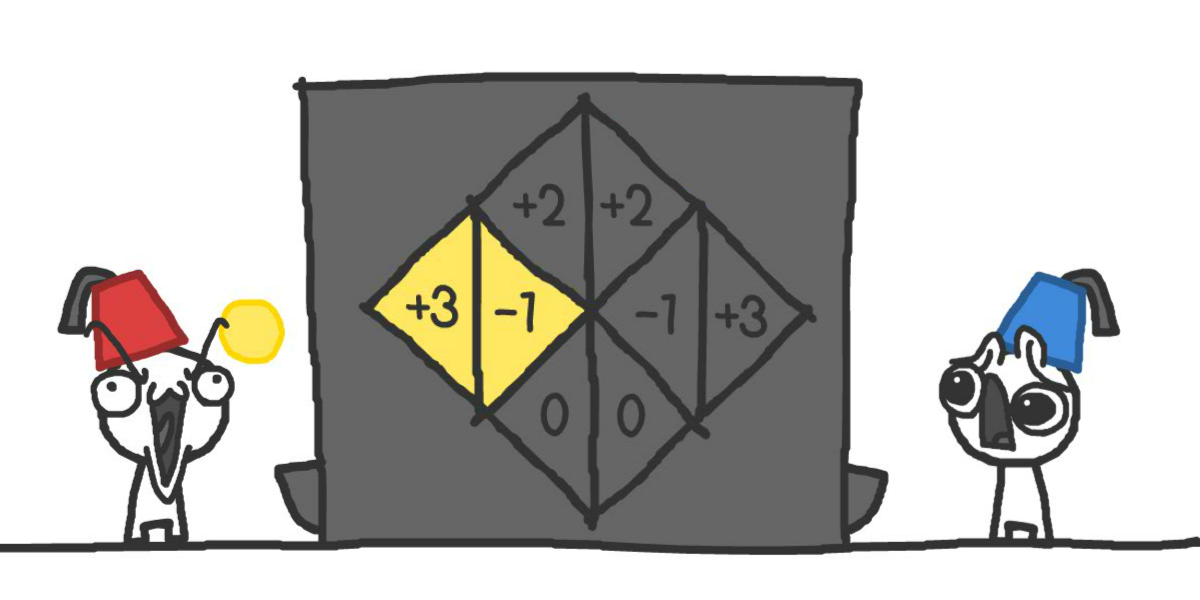
How do a few turns become one direction?
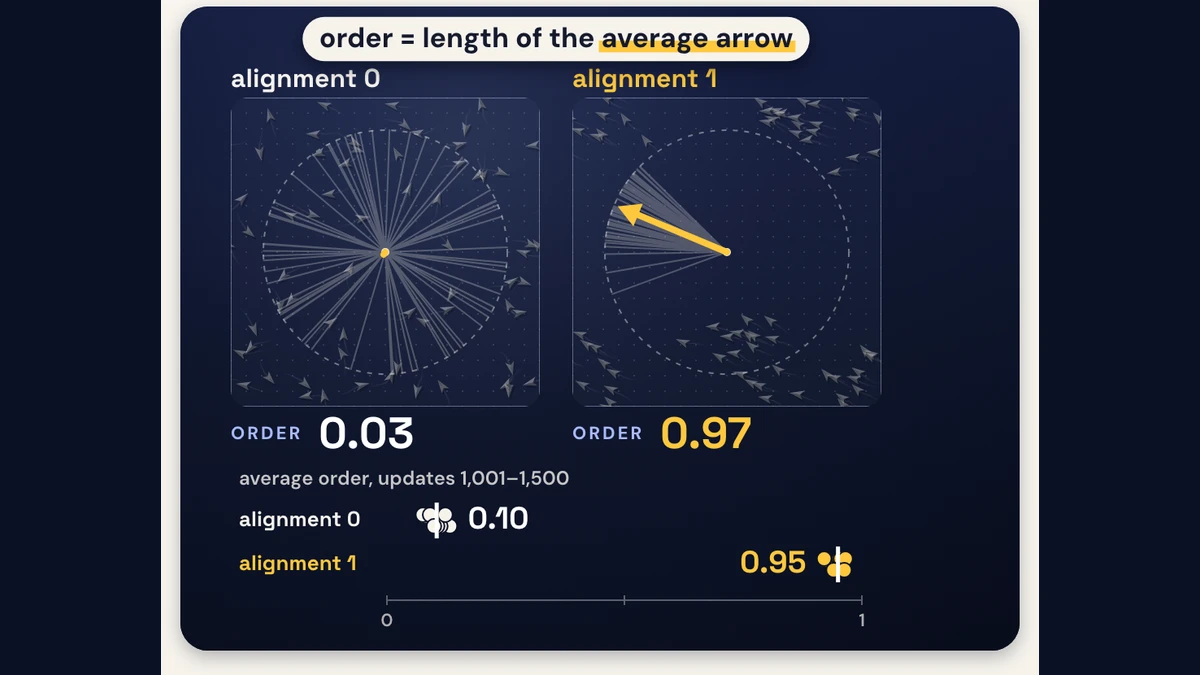
Change only the strength of local heading alignment while speed, neighborhood, noise and seed stay fixed; follow the directional-order readout without treating it as flock tightness.
Science · Math
Original visual lessons: change one variable, observe what happens, and understand why. Interactive models and short narrated films for curious minds.
explainertools.com56 selected projects, with credit and a path to the original.

Change only the strength of local heading alignment while speed, neighborhood, noise and seed stay fixed; follow the directional-order readout without treating it as flock tightness.

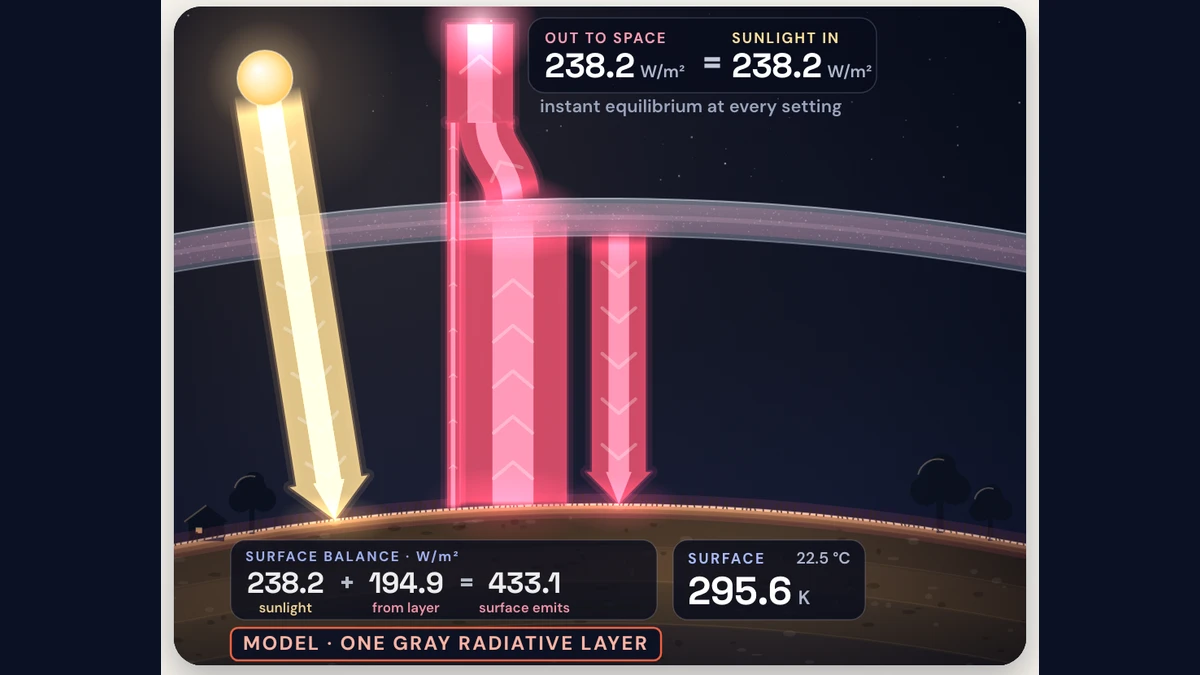
Adjust one ideal gray layer’s effective infrared absorption and follow the conserved fluxes and equilibrium temperatures while sunlight and albedo stay fixed.

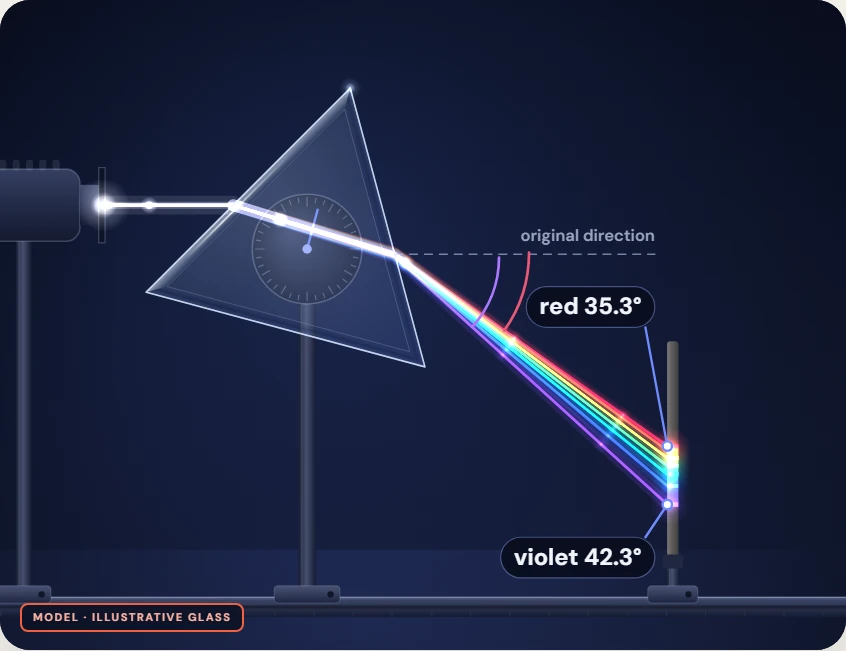
Change hypothetical dispersion while prism geometry and the incoming ray stay fixed; the sampled colors converge to one still-bent beam.

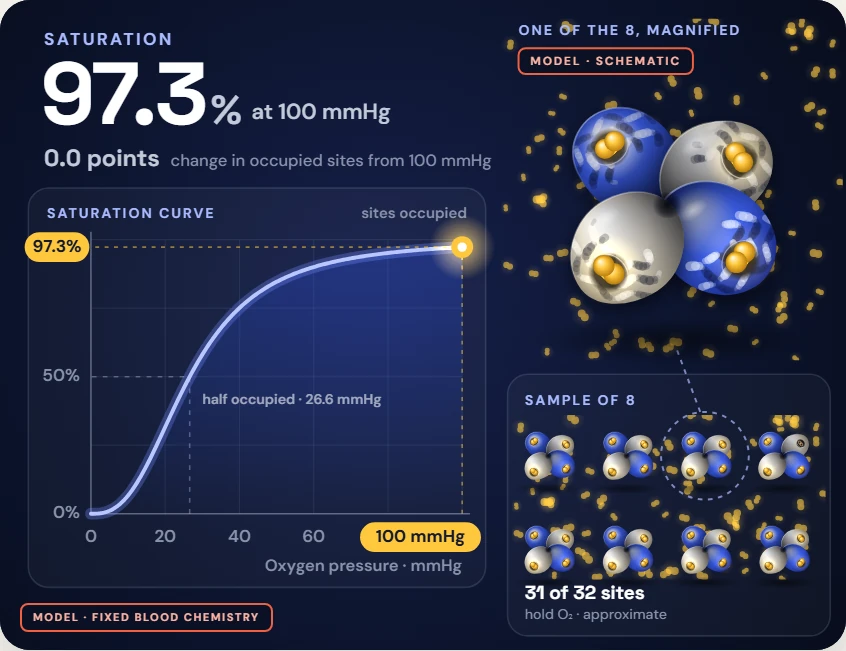
Change oxygen partial pressure and watch modeled hemoglobin saturation move along a cooperative Hill curve from a lung-side reference toward mixed-venous pressure.

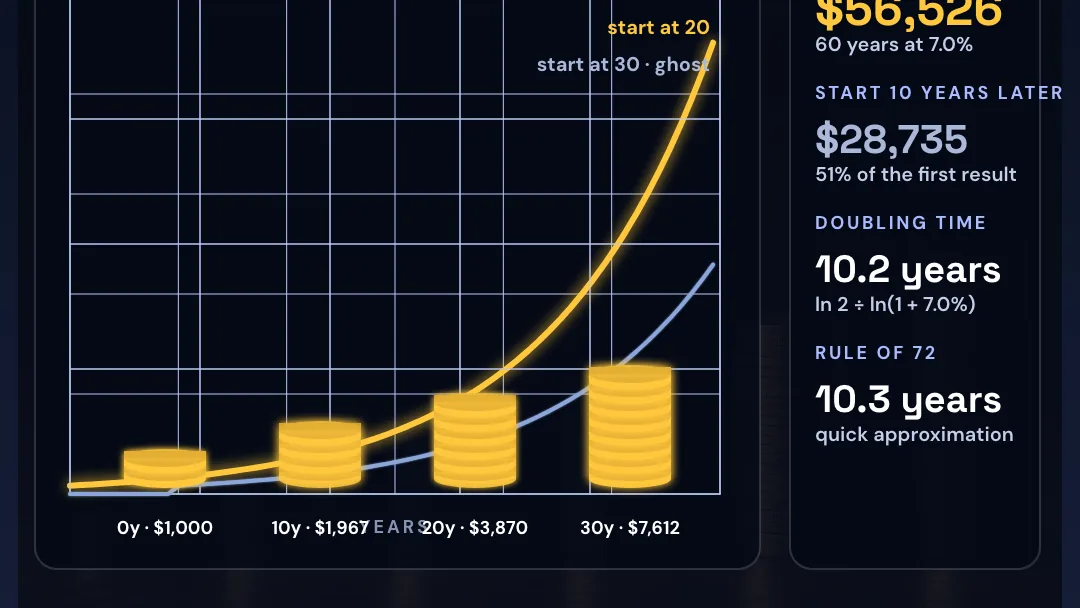
Change return and starting age to see years invested through a fixed ending age of 80, doubling time and the cost of starting ten years later.

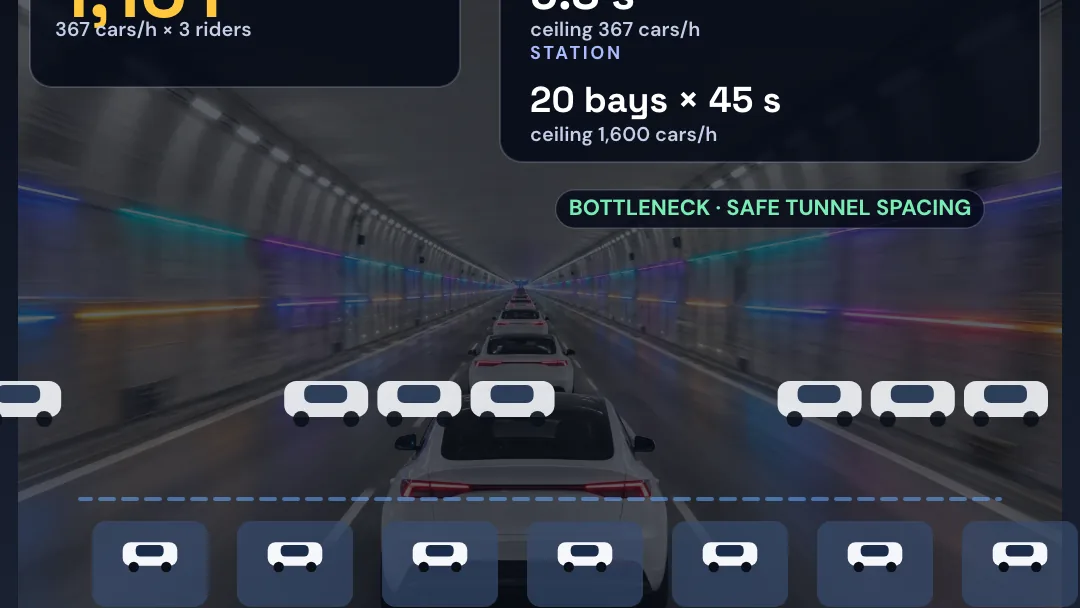
Change car headway, riders and loading bays to see whether the tunnel or station limits people per hour.

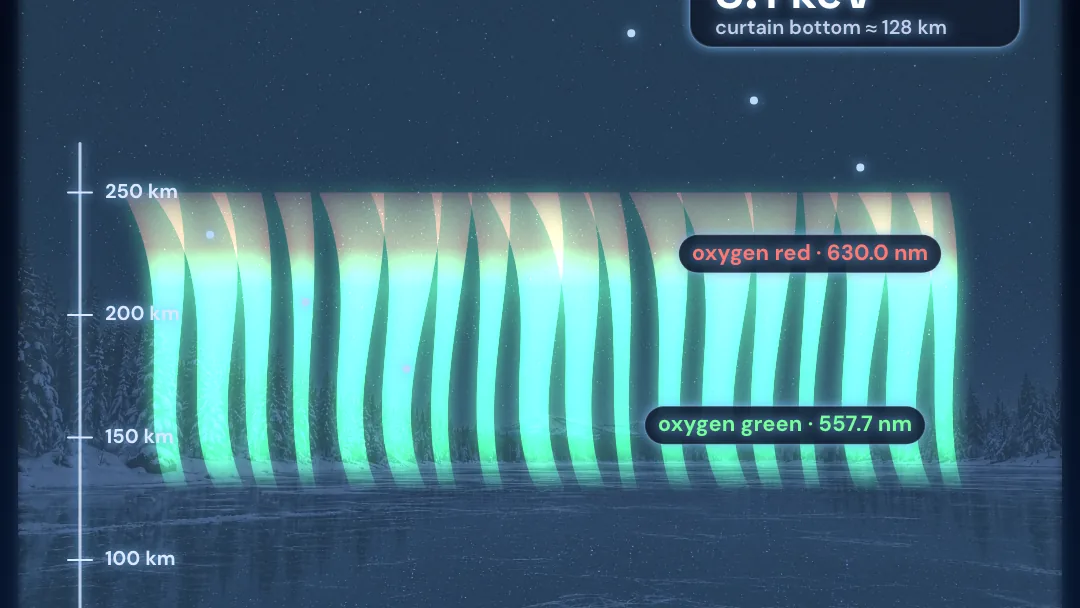
Raise incoming electrons’ energy and watch the curtain reach lower, from high red oxygen through green oxygen to a nitrogen fringe.

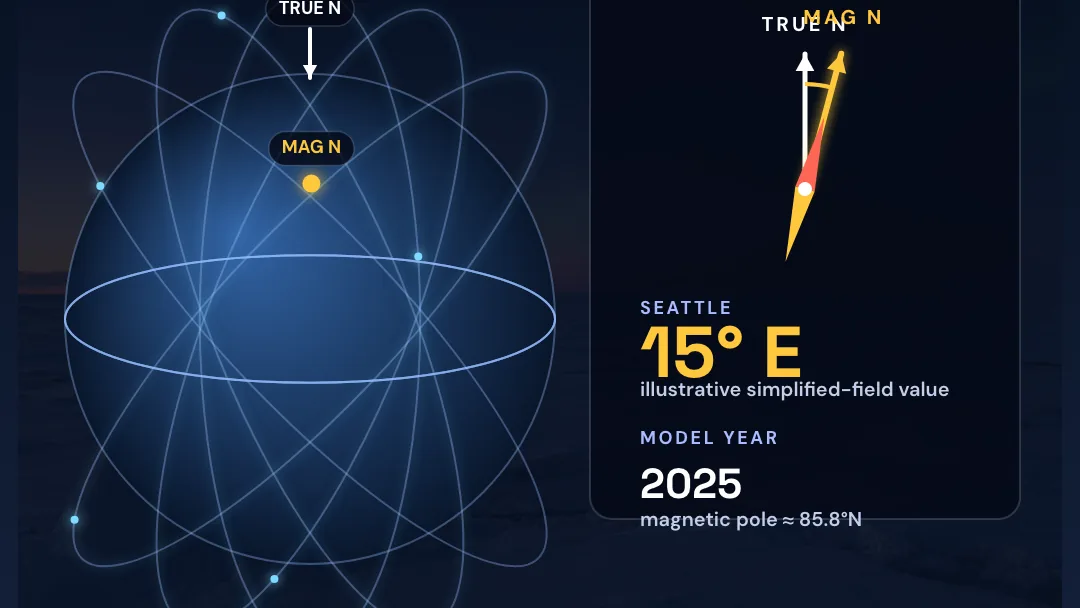
Pick a city and year to see true north separate from magnetic north in an explicitly simplified field model.

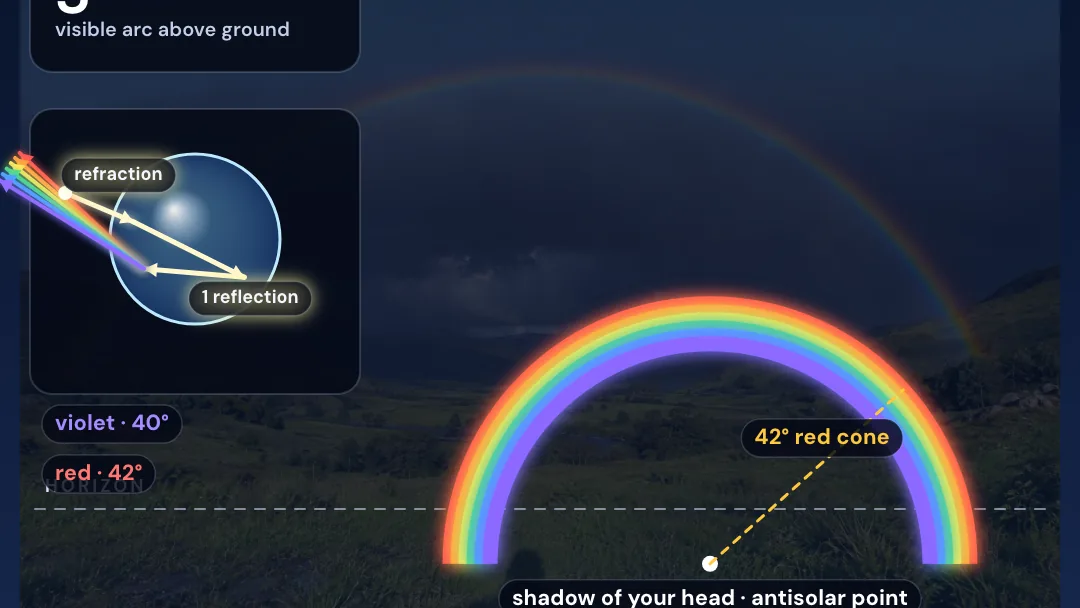
Move the Sun and see why drops on a 42-degree cone form a circle around the shadow of your head.

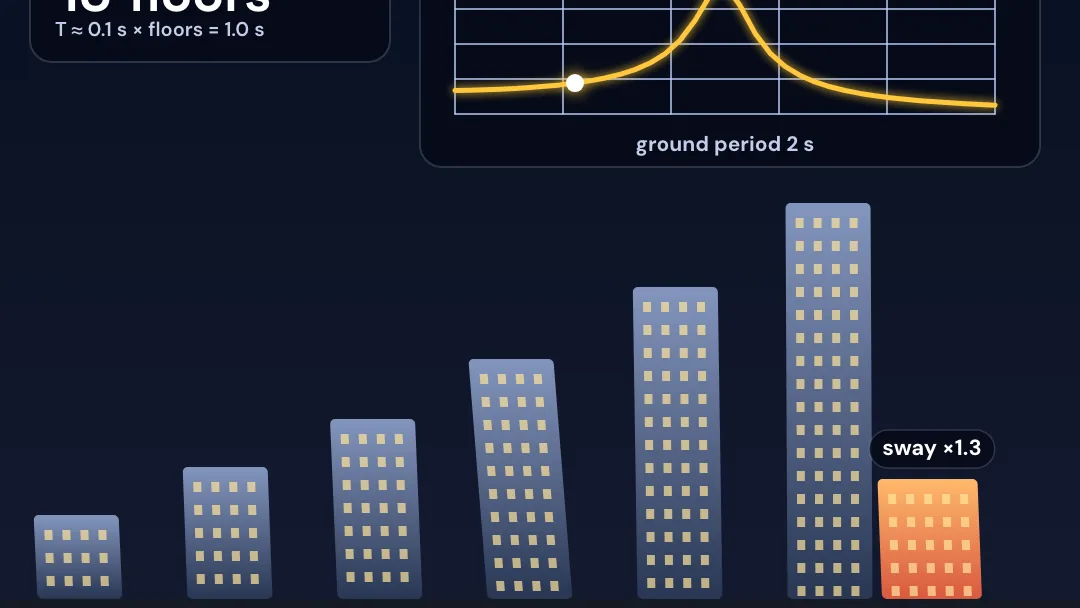
Change floor count and see a tower’s natural period move into and out of resonance with two-second ground motion.

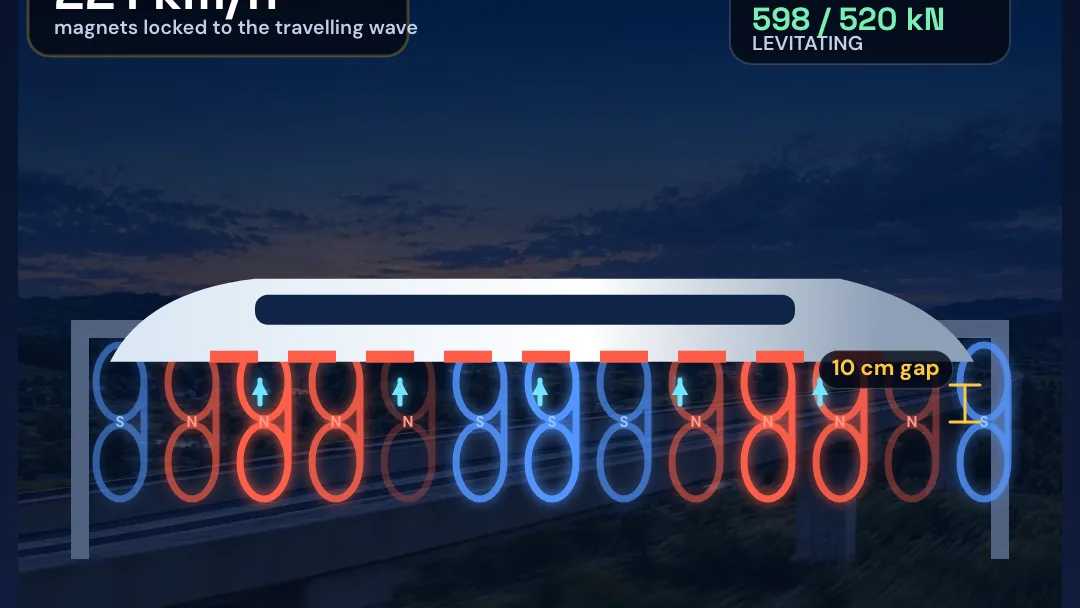
Change train speed and watch induced currents build enough lift to clear the guideway while a travelling magnetic wave matches the train.

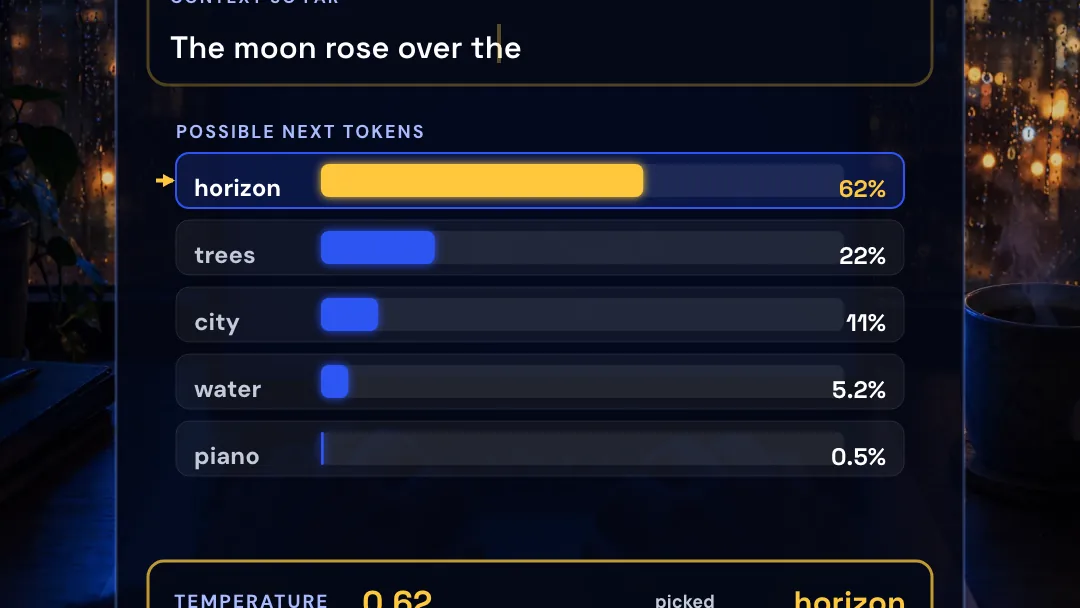
Move temperature and a deterministic sample point to see illustrative next-token logits become narrow or surprising probabilities.

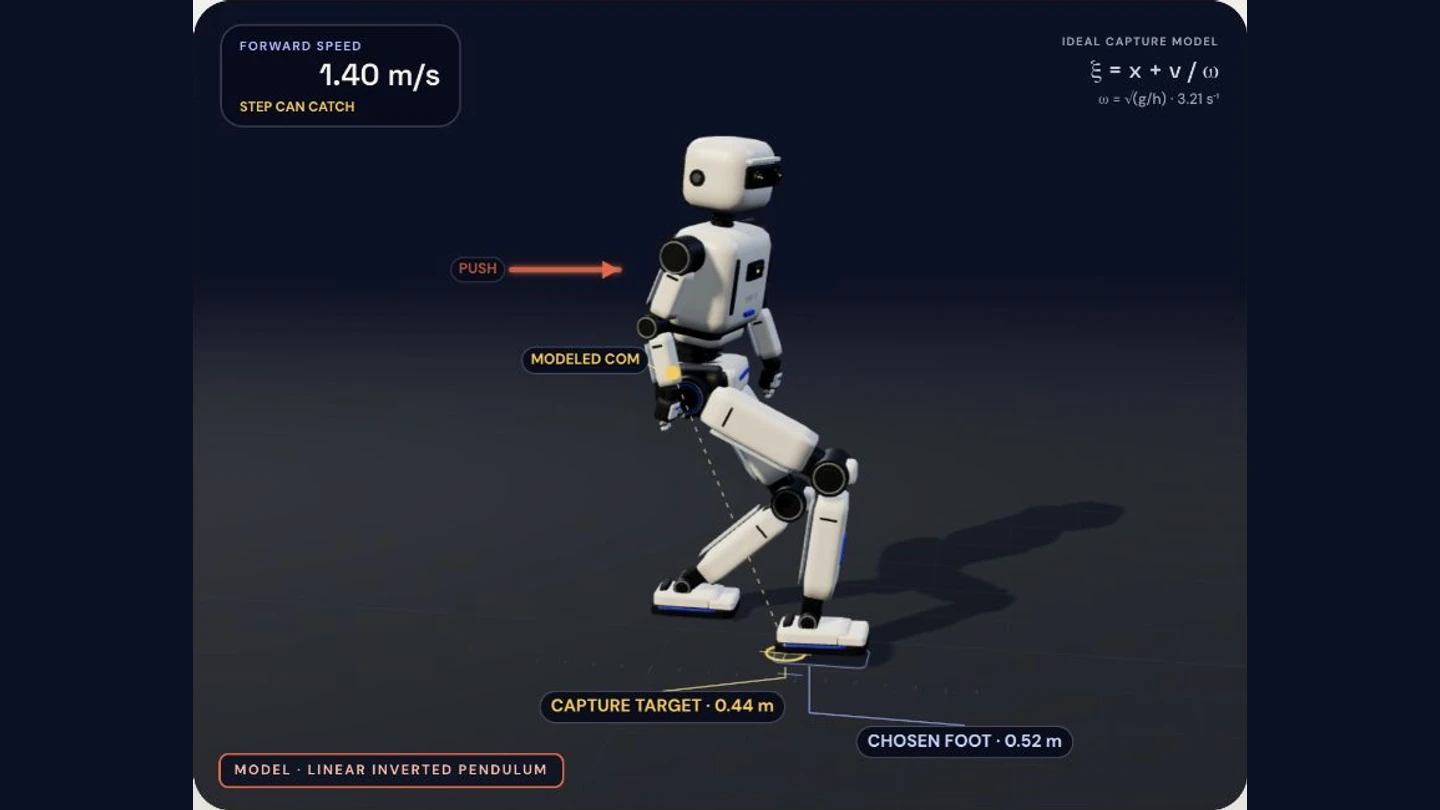
Push a code-drawn humanoid and move its next step to see how the capture point shifts and why a short step topples it.

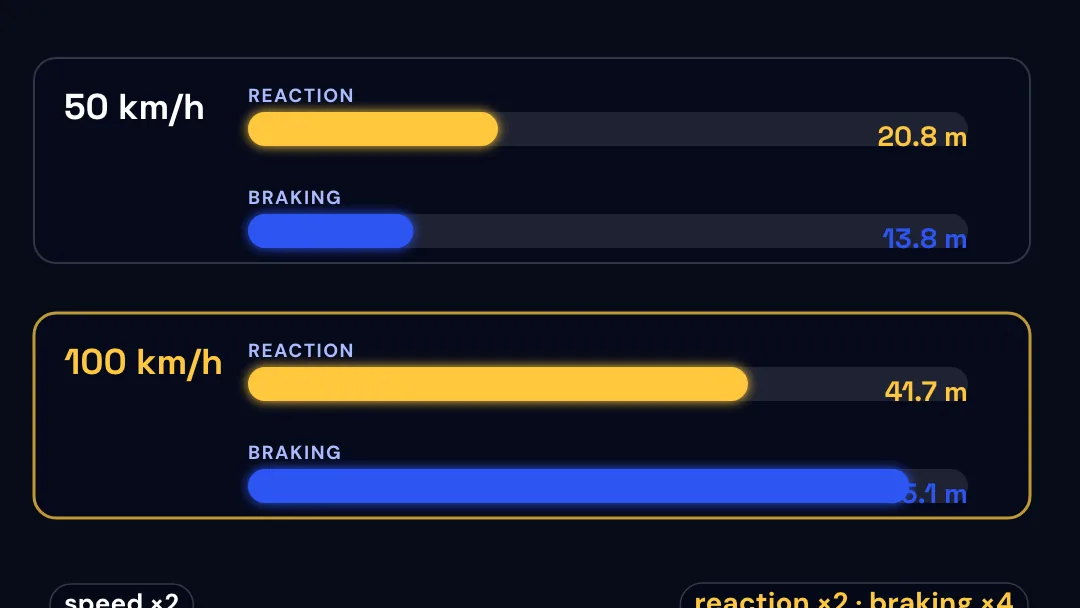
Change speed, reaction time and braking grip to separate the distance traveled before braking from the distance needed to stop.

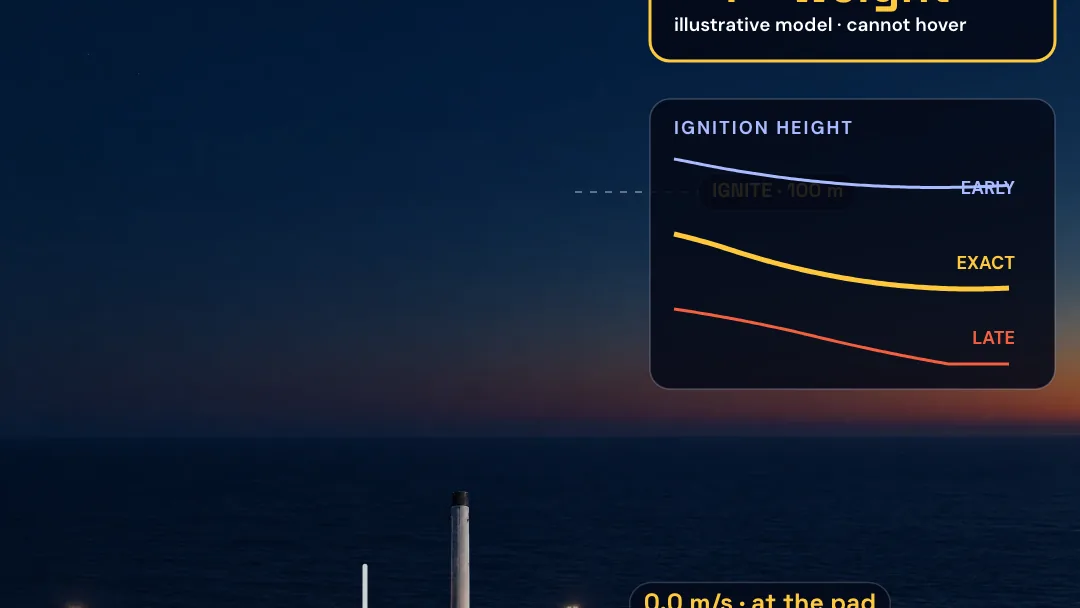
Move a booster's ignition height and see why too early climbs again, too late hits, and one modeled height reaches zero speed at the pad.

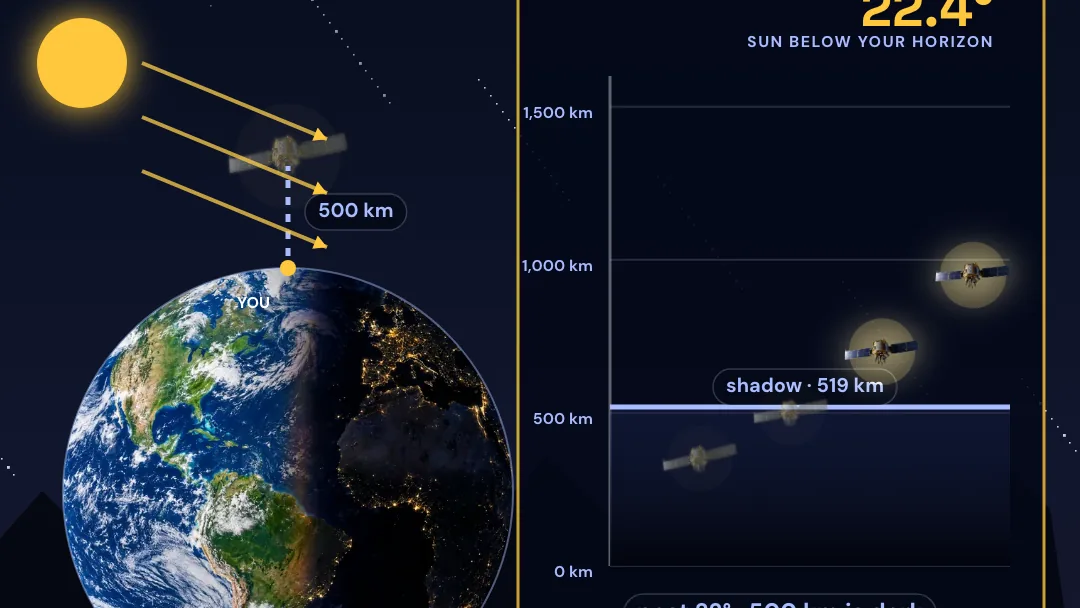
Move the Sun below your horizon and watch Earth's shadow rise through low orbit until a 500-kilometer satellite goes dark.

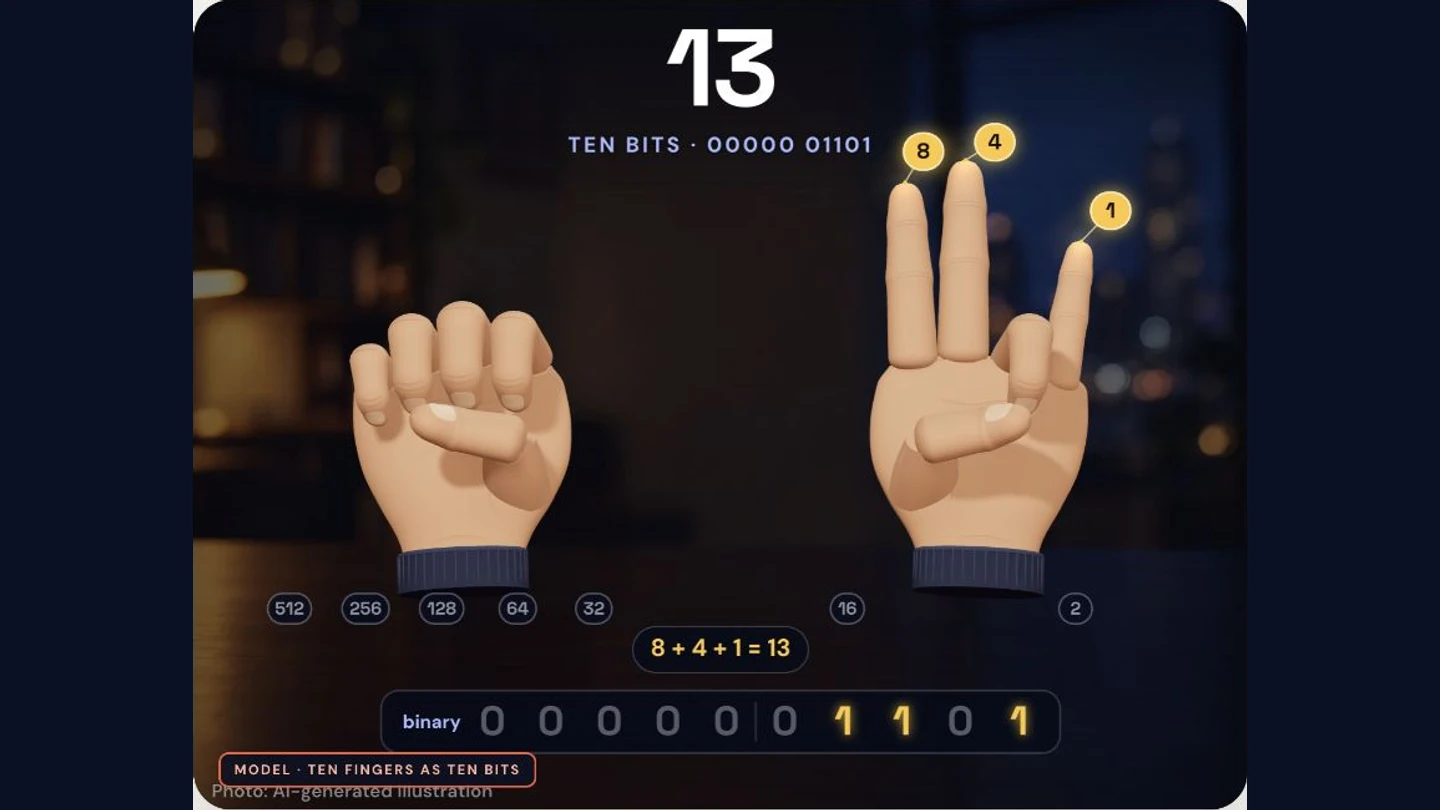
Raise code-drawn fingers worth 1 through 512 and see ten binary switches represent every number from 0 to 1,023.

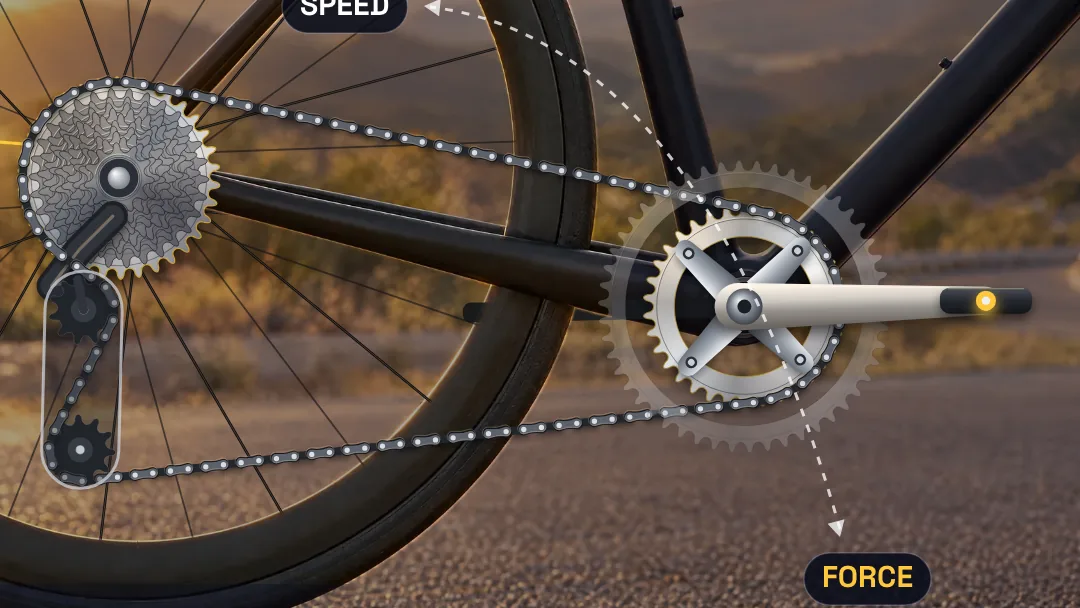
Choose a chainring and rear cog, then watch one pedal turn trade wheel speed for the force needed at your foot.

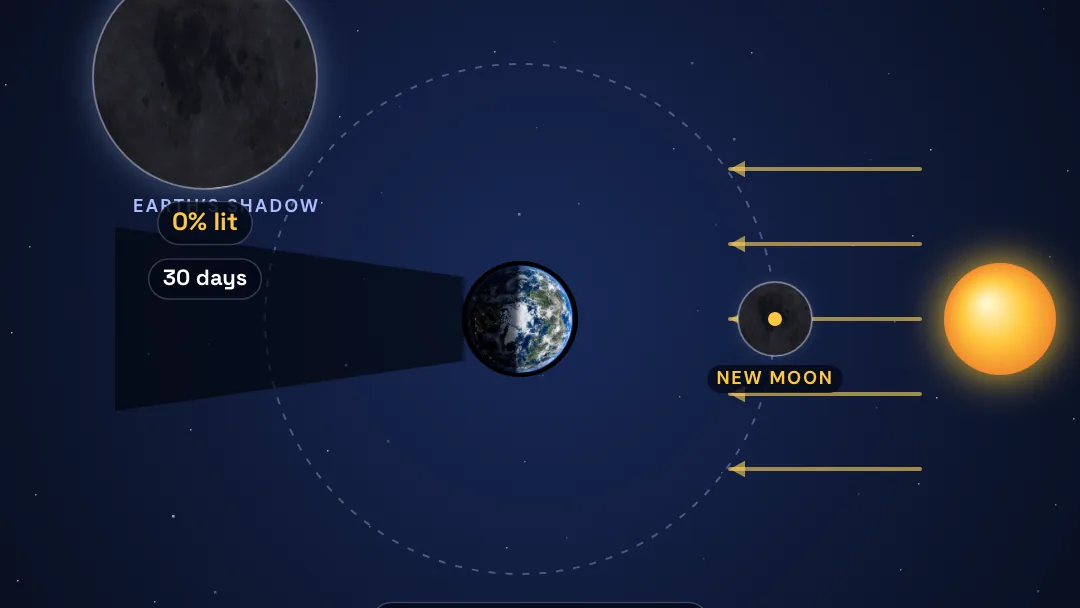
Move the Moon around Earth and watch the visible lit fraction change while sunlight always illuminates one lunar half.

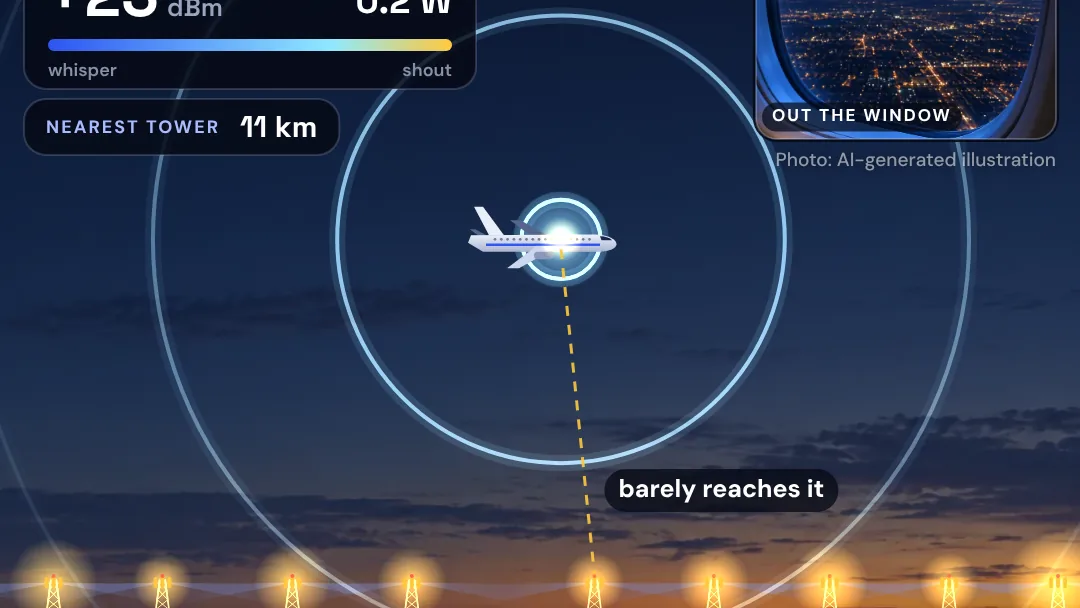
Drag a phone up to cruising altitude and watch its radio climb to full power as the towers it can reach fall out of range.

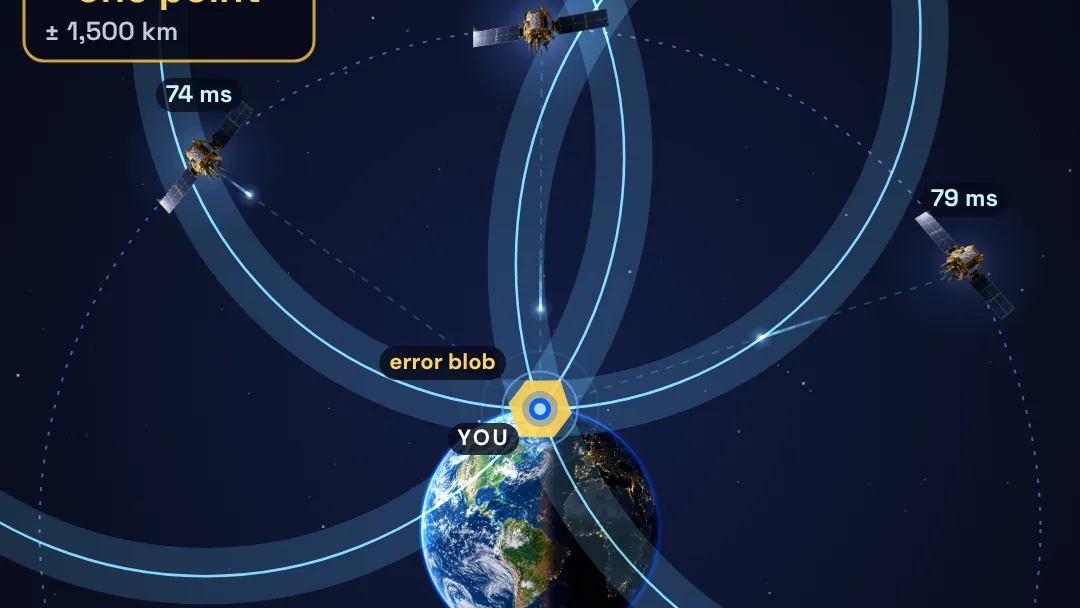
Drag satellites into view and watch their timed signals shrink your phone's position to a single point.

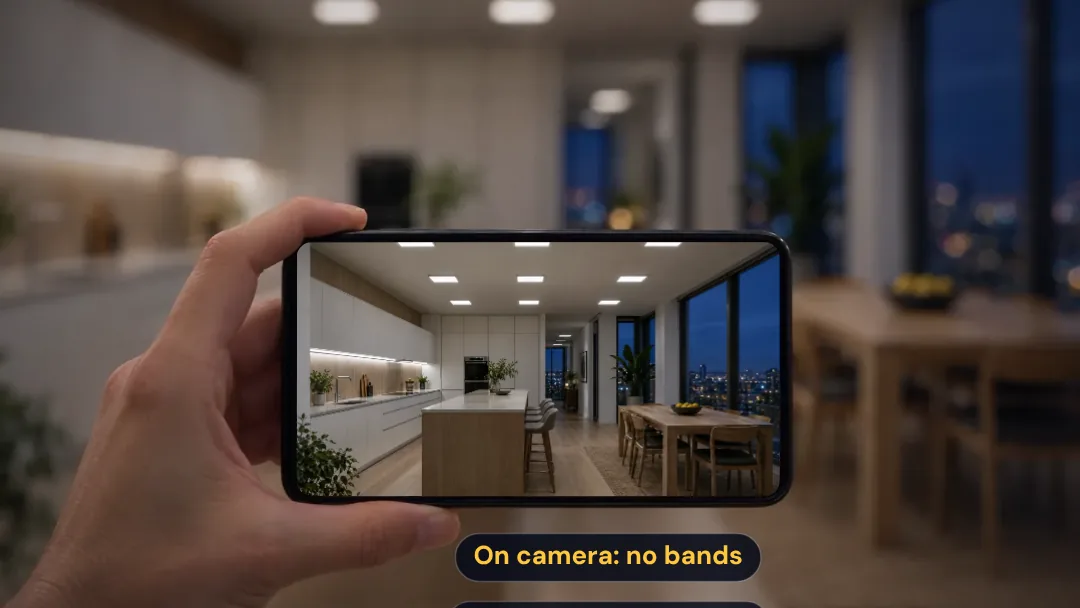
Drag a phone camera's shutter speed and watch the dark bands from pulsing LED light disappear when each exposure spans one whole pulse.

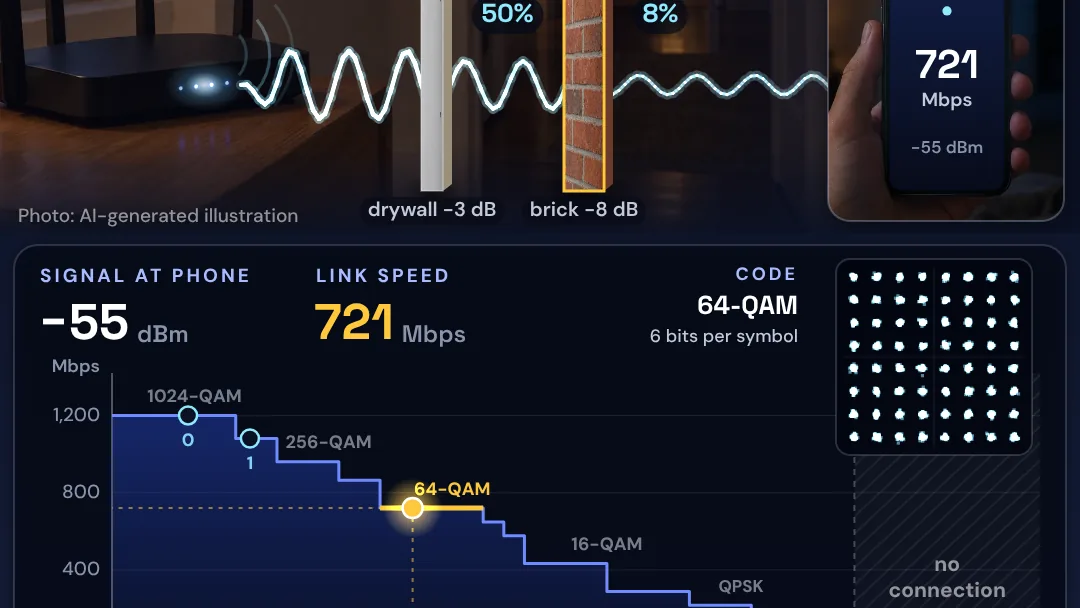
Add walls between a router and a phone and watch the signal fade, with the link speed stepping down wall by wall.

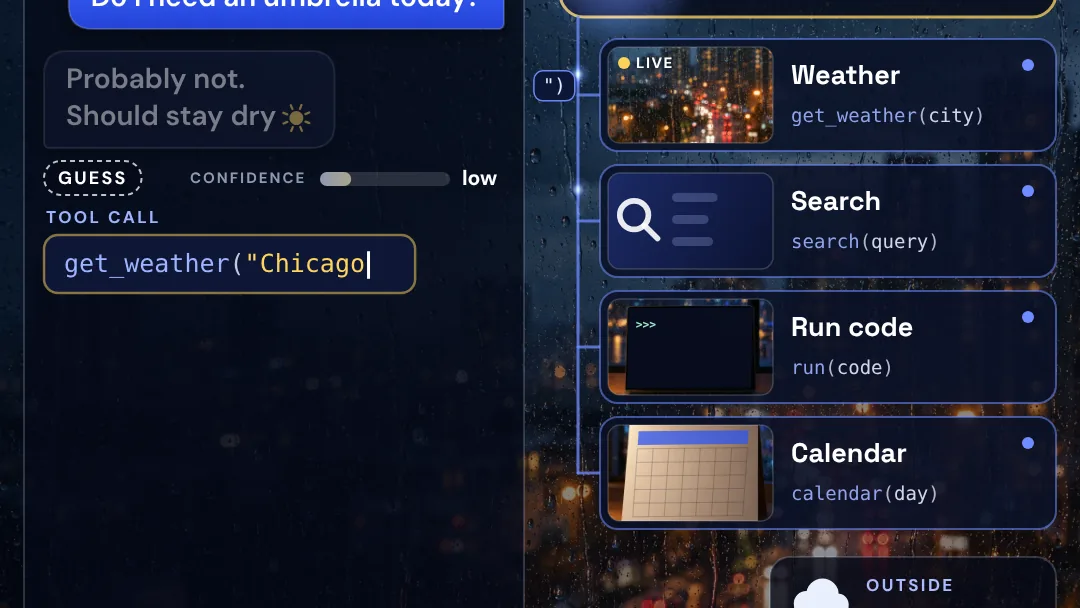
Switch an AI assistant's tools on and watch it turn a guess about today's weather into a lookup.

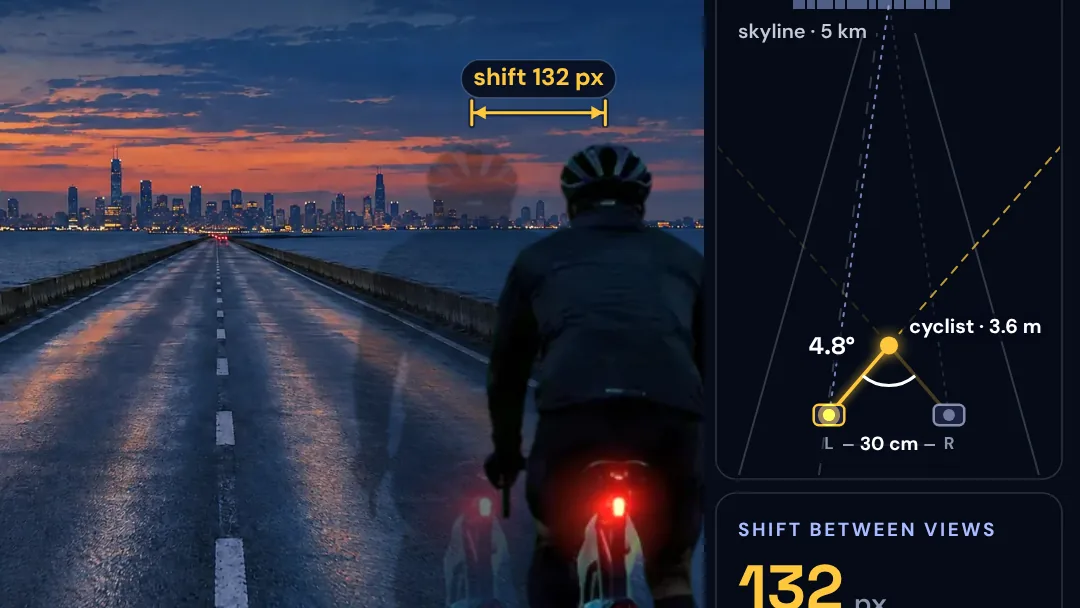
Drag a cyclist toward a pair of cameras and watch the shift between their two views grow as the distance shrinks.

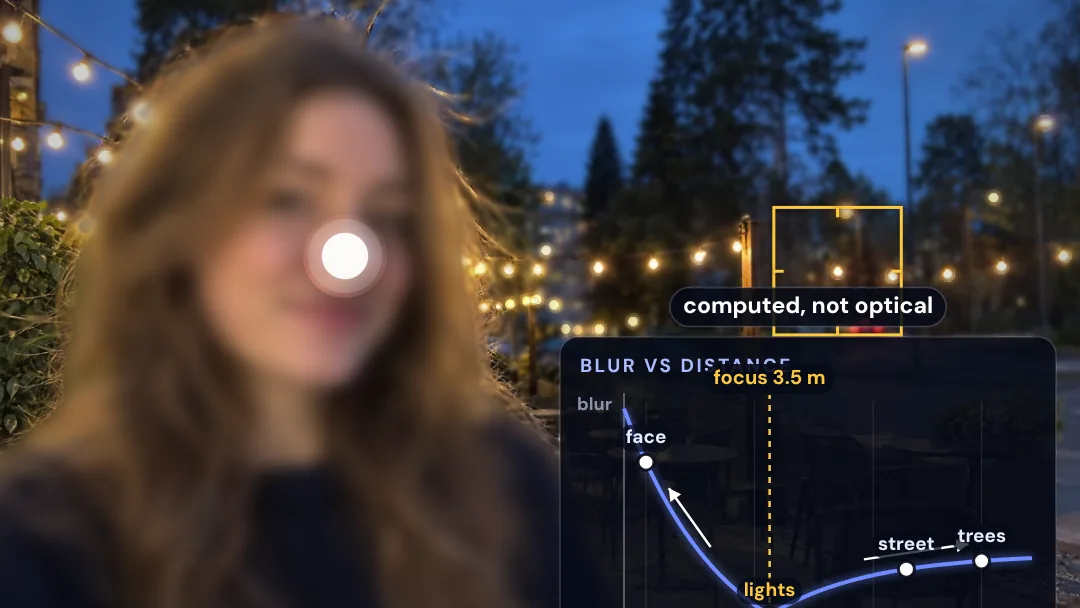
Tap a photo to move the focus point and watch software blur each part of it by its distance in a depth map.

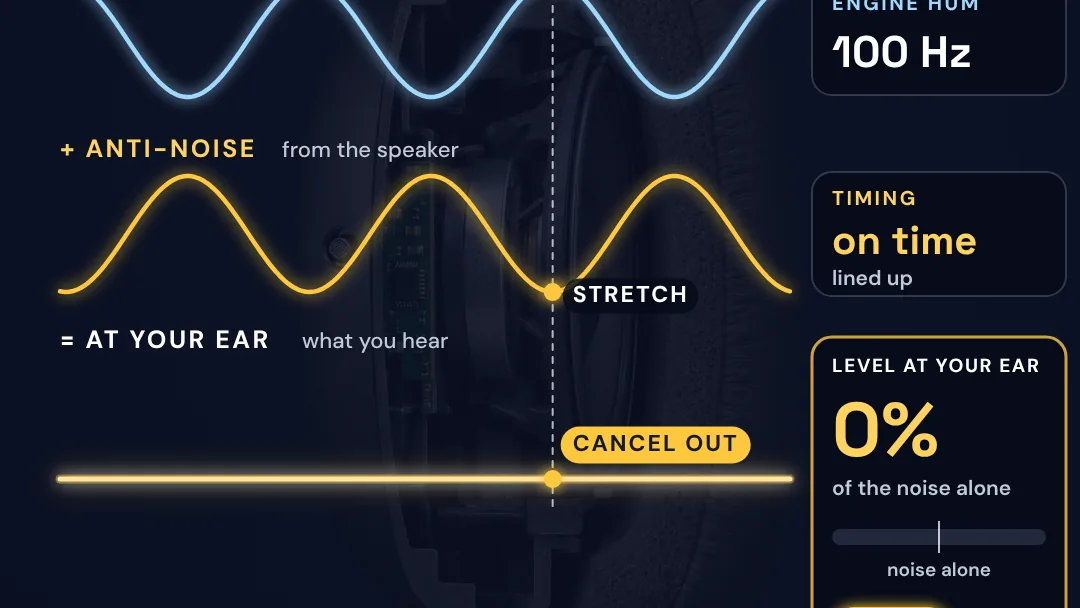
Slide an anti-noise wave against an engine hum and watch the two cancel. Let the timing slip and they add up instead.

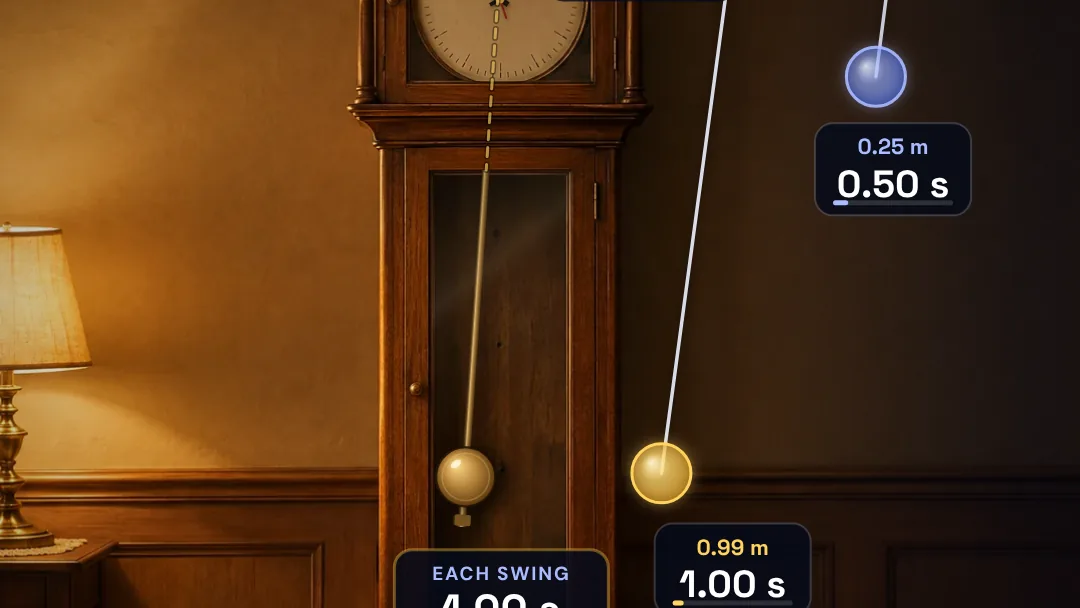
Drag a pendulum longer and watch its swing slow. At about one meter, each swing takes one second, which is why clock cases are tall.

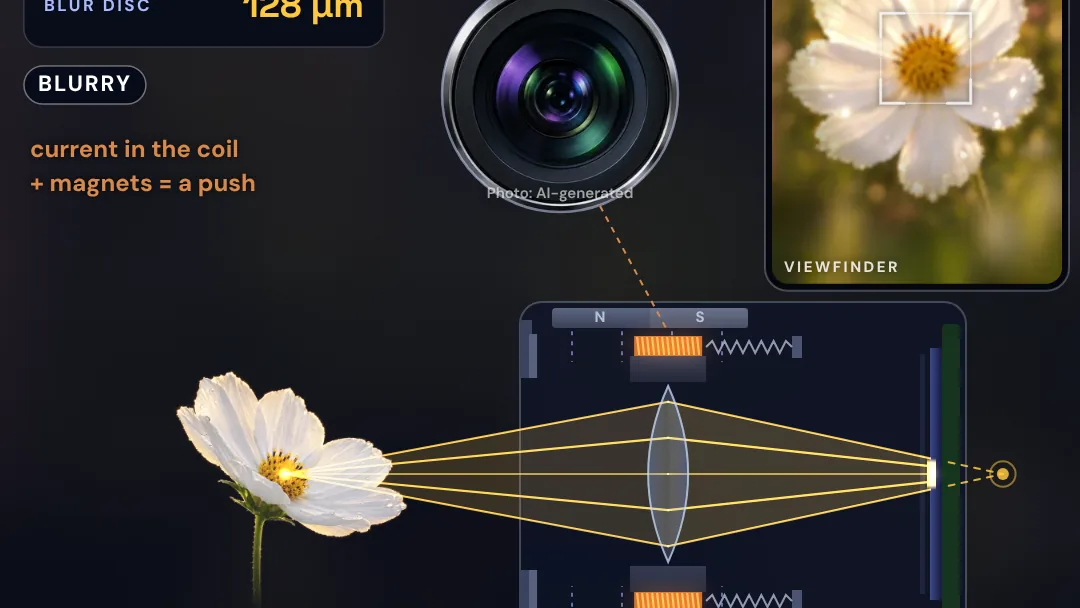
Drag a flower toward a phone camera and watch a tiny motor slide the lens until it runs out of travel at about 10 cm.

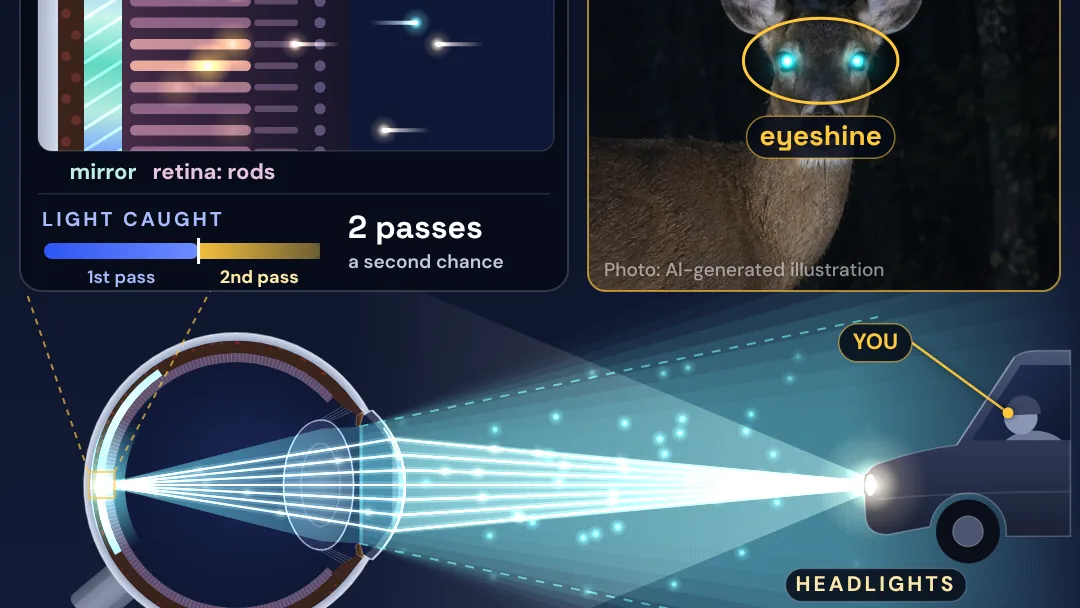
Take the mirror out of a deer's eye and watch its eyeshine vanish. Why eyes glow in your headlights, and what biologists say about the freeze.

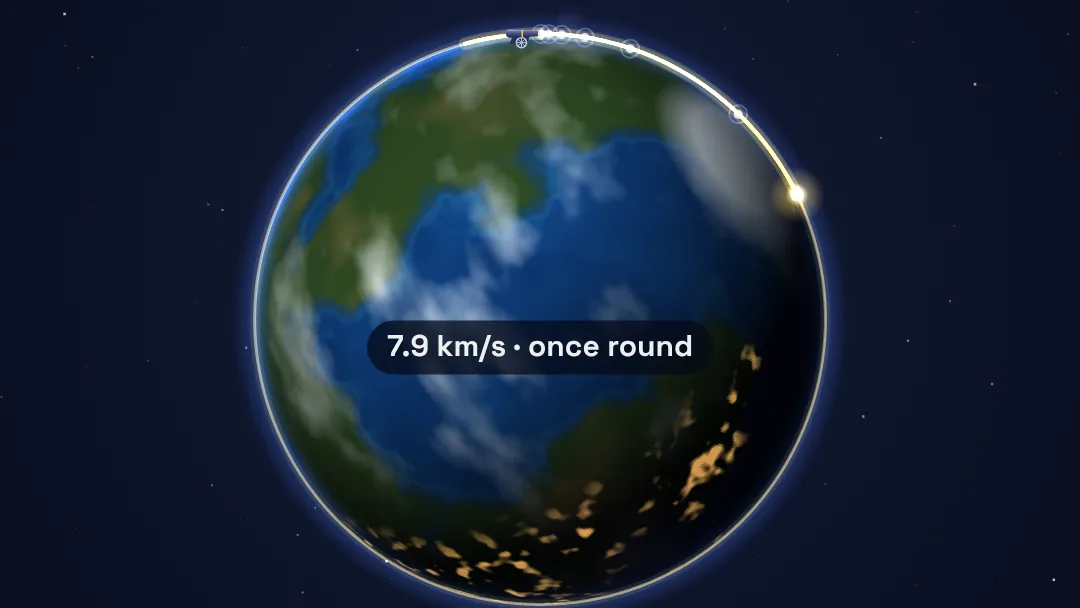
Fire a cannonball faster and faster from a mountain top until the ground curves away as fast as it falls. Newton's cannon as a working model.

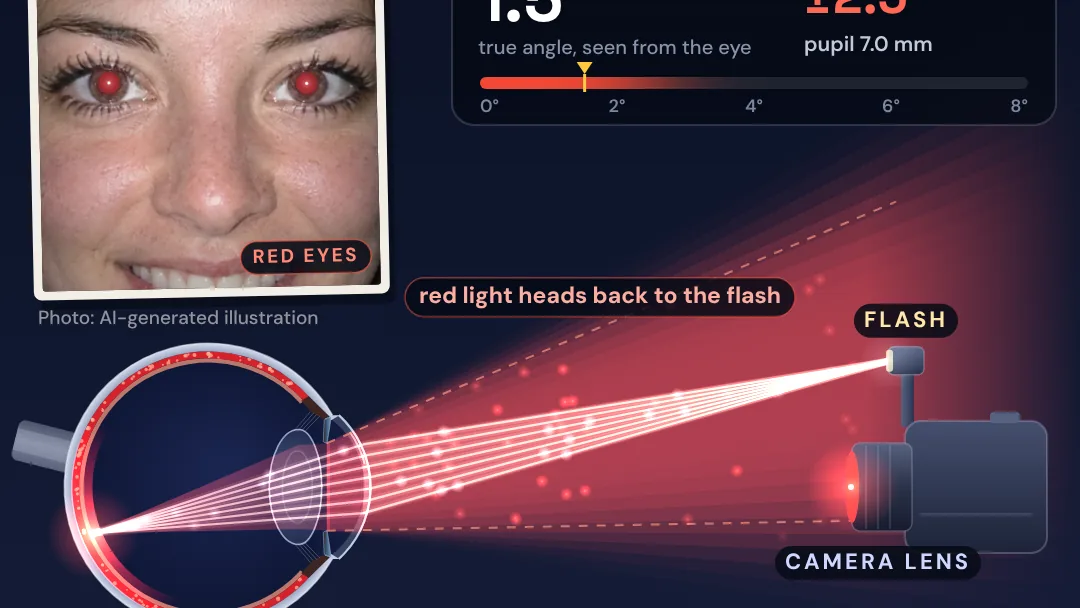
Slide a camera's flash away from its lens and watch the red return beam miss. A simplified model of why eyes glow red in flash photos.

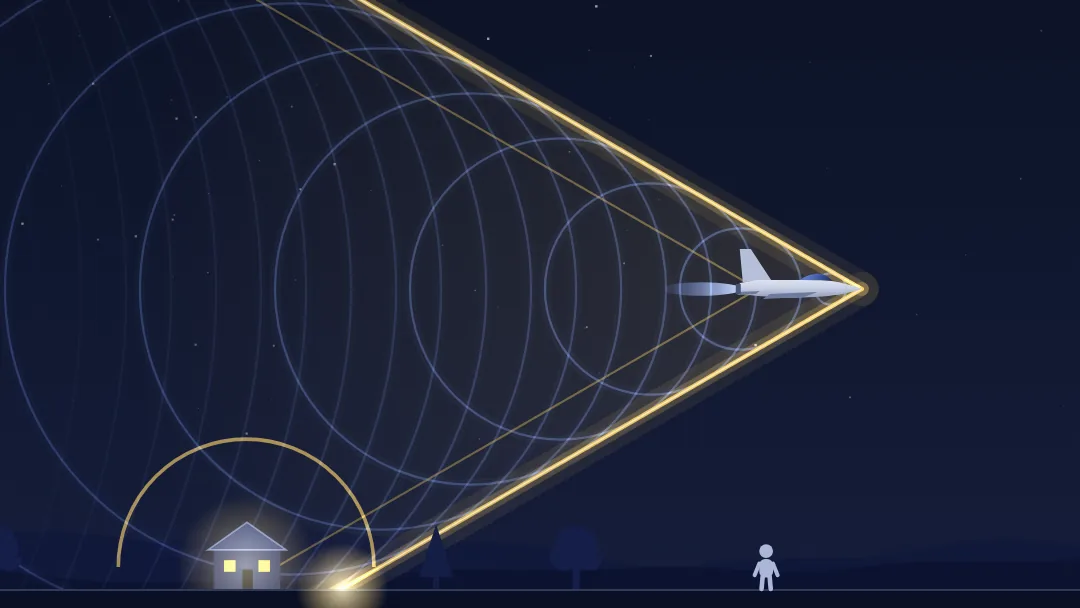
Drag a plane past the speed of sound and watch its sound rings pile into a cone that sweeps the ground. An interactive model of sonic booms.

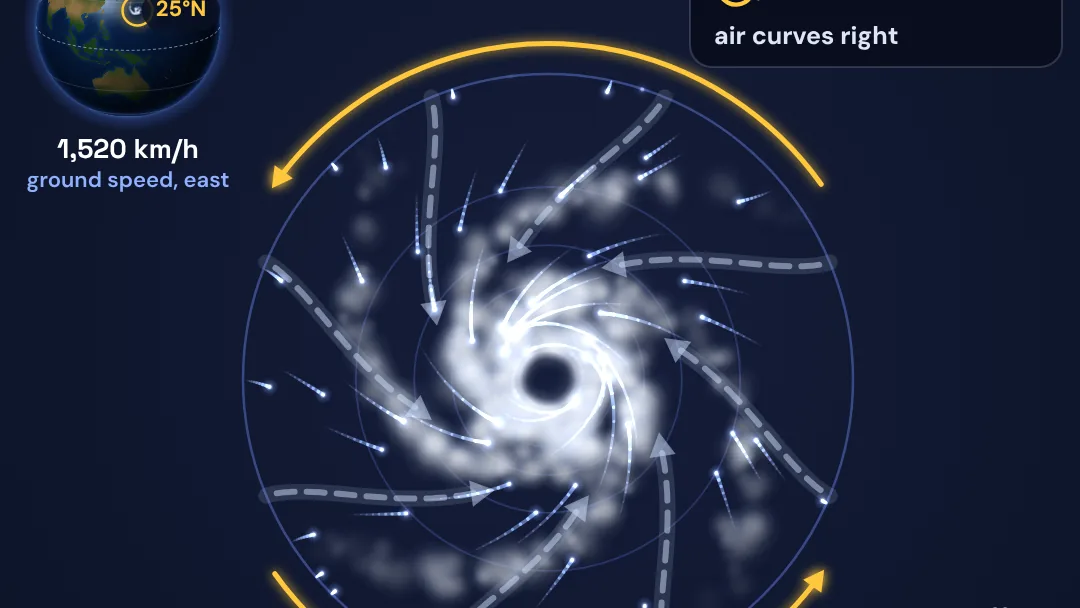
Drag a storm from north to south of the equator and watch Earth's spin curve its inflowing air one way, then the other. A sped-up Coriolis model.

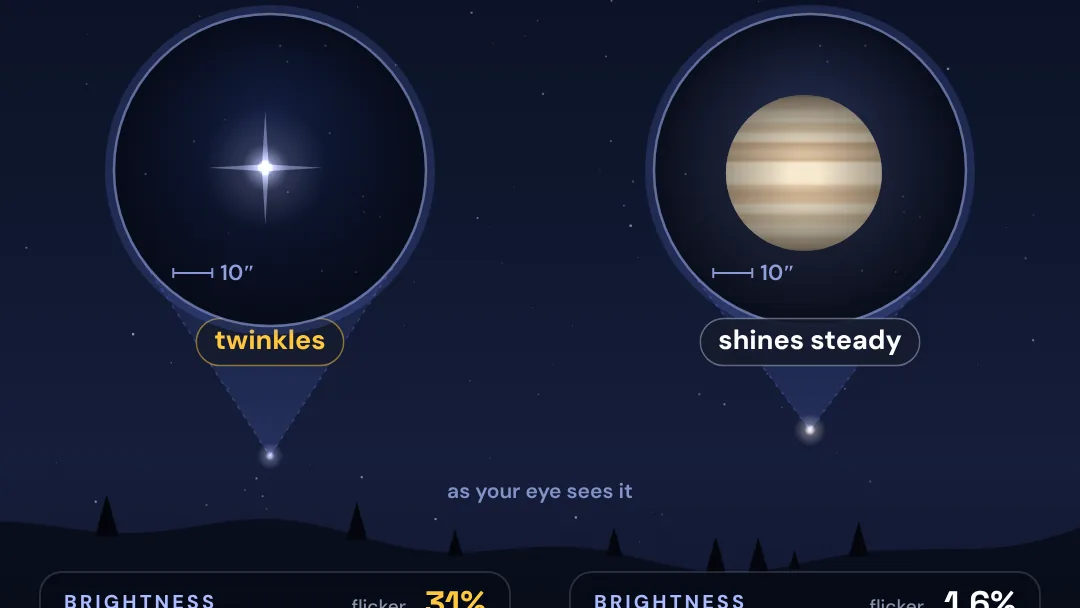
Grow a point of starlight into a planet's disk and watch the twinkle average away. A simplified model of atmospheric scintillation.

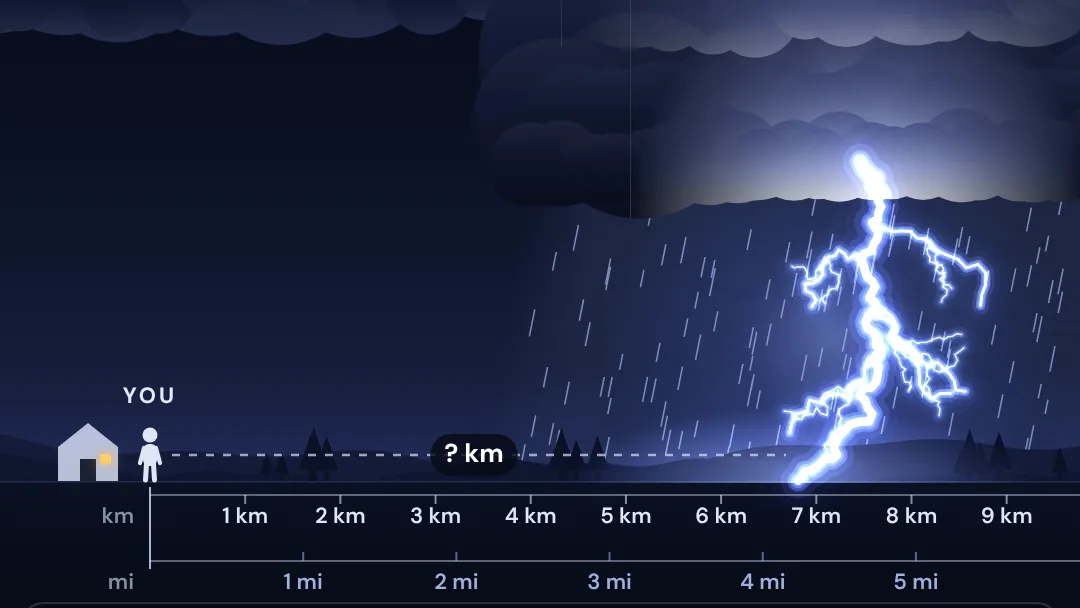
Drag a lightning strike closer and count the seconds until the thunder arrives. The speed of sound, the 3-seconds-per-km rule and storm safety.

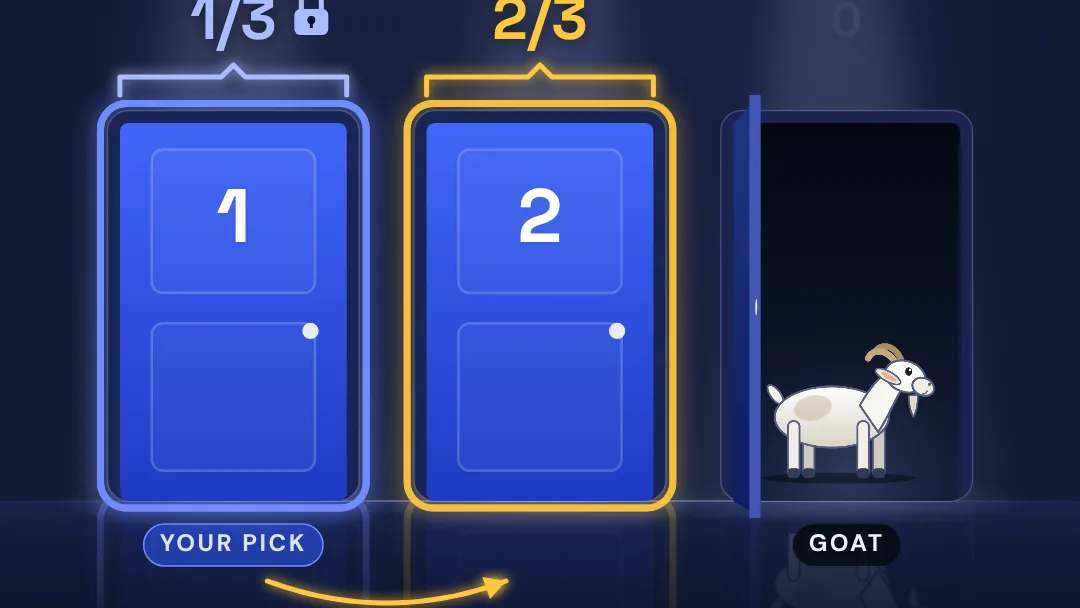
Play the Monty Hall game by hand, then run thousands of rounds with up to 100 doors. See why switching wins two times in three.
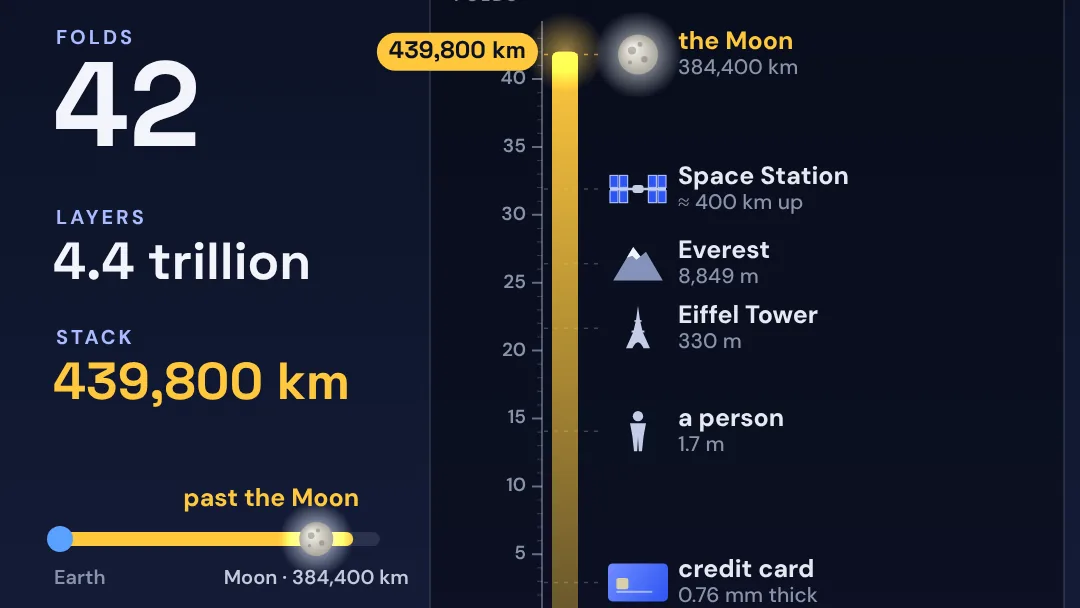
Fold a paper strip again and again and watch each bend eat more paper. Britney Gallivan's folding limit, plus a stack that reaches the Moon.

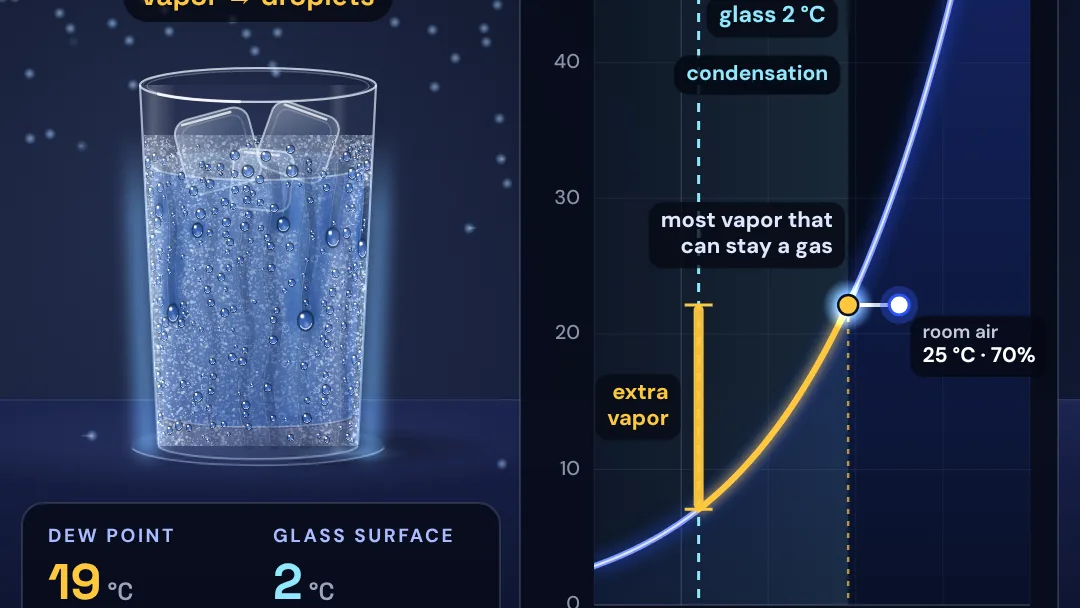
Drag the humidity and the drink temperature and watch droplets form or vanish on a cold glass. An interactive dew-point model.

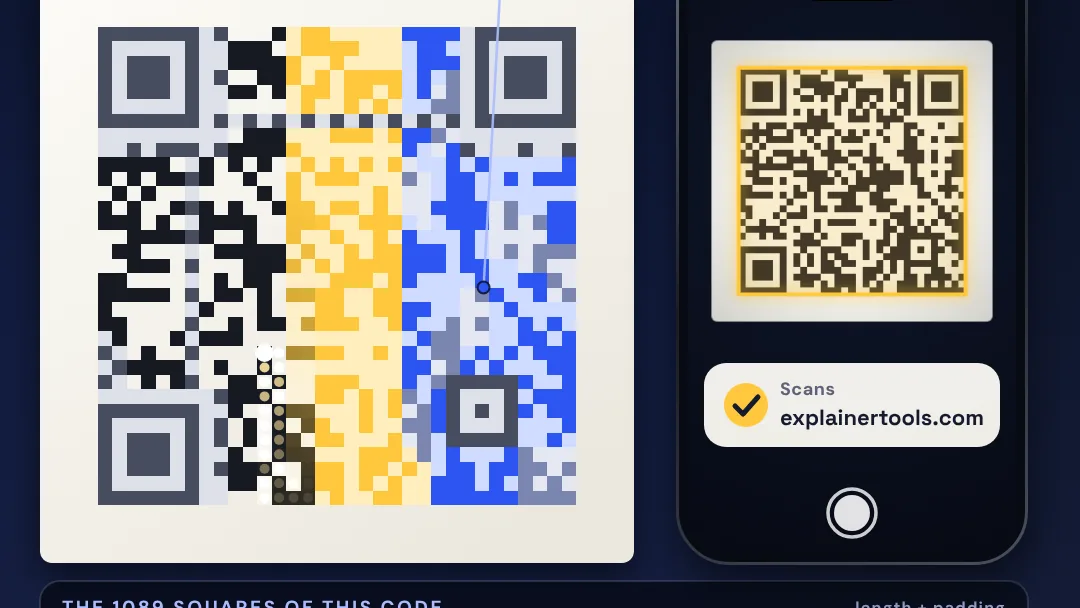
Tear, stain and scratch a real QR code and watch a real decoder still read it. Error correction you can break with your own hands.

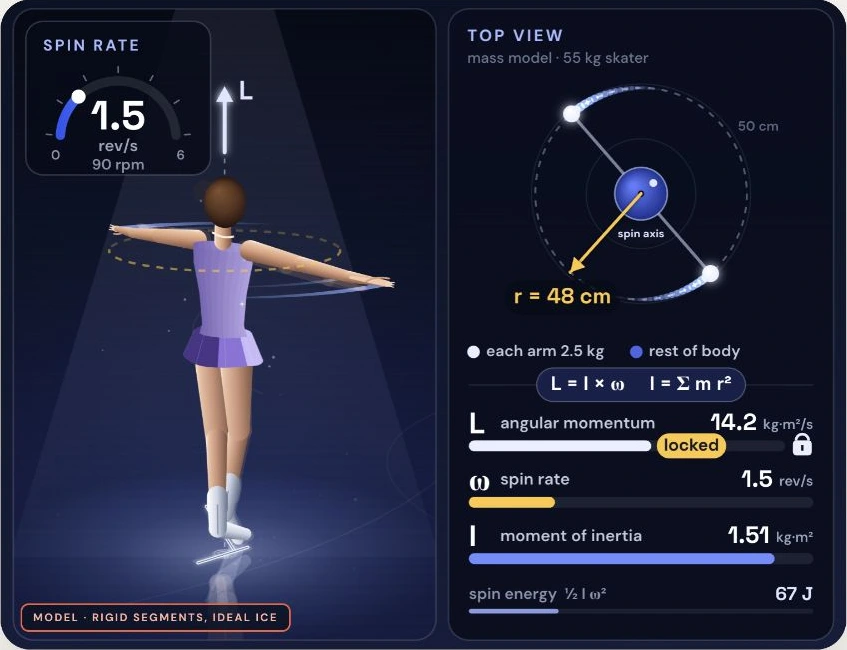
Pull a spinning skater's arms in and watch the spin speed up while angular momentum stays locked. A segment model of a real spin.

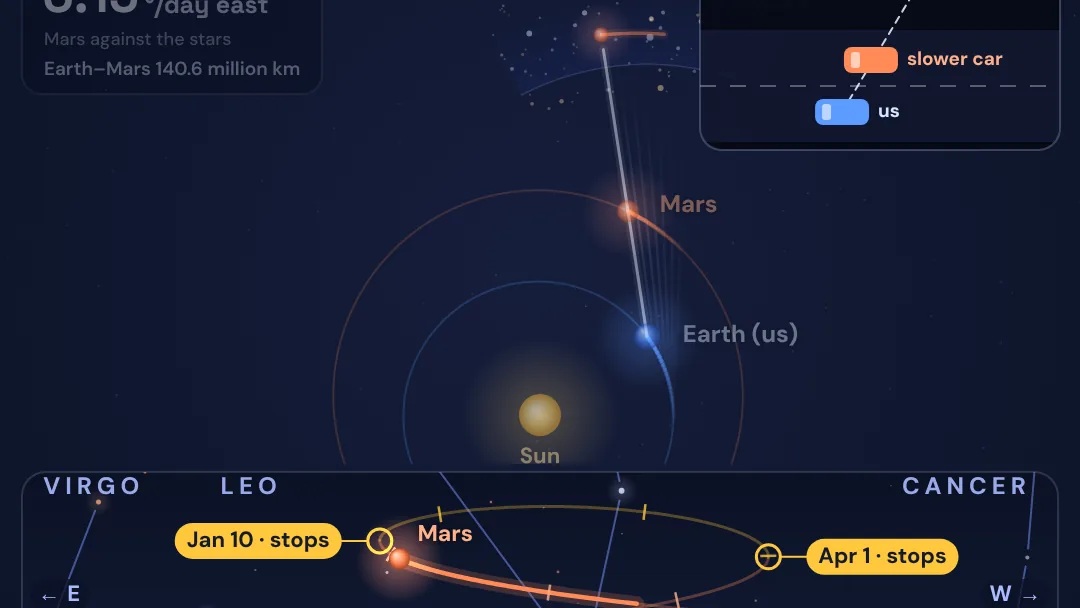
Drag the date through early 2027 and watch Mars loop backward against the stars of Leo as Earth overtakes it. Real orbits, real stars.
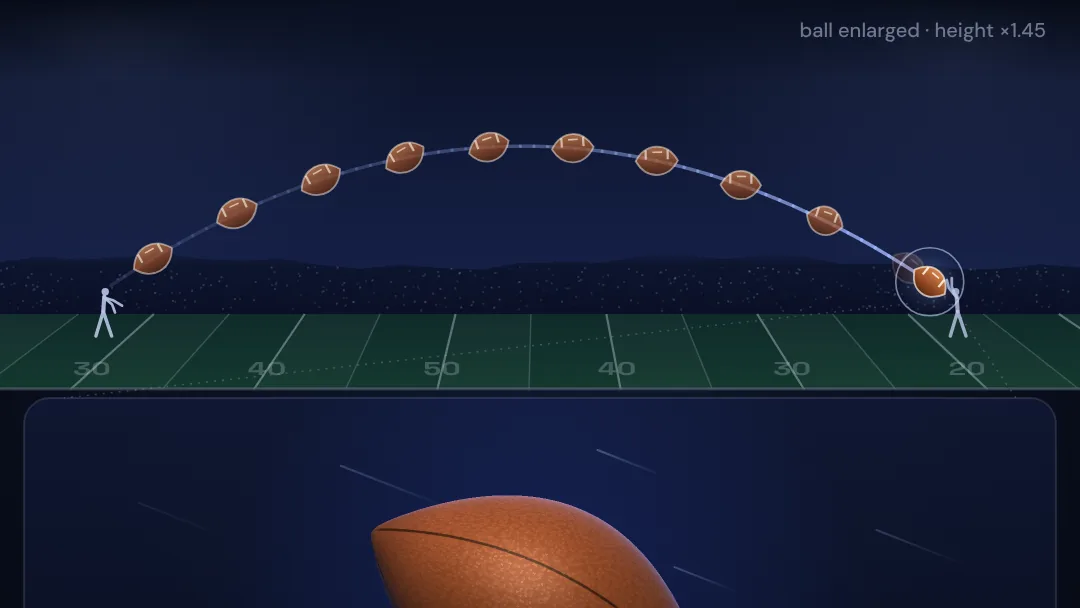
Crank a football's spin and watch the same shaky release shrink from a wobbly duck into a tight spiral. Gyroscopic stability you can throw.

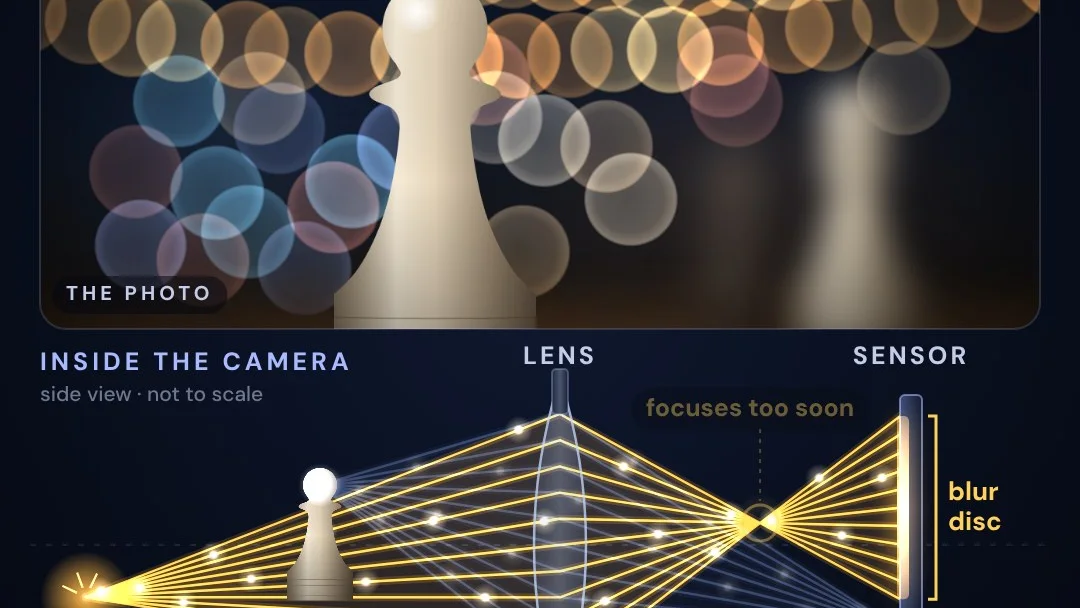
Close the aperture and watch the background sharpen. Follow the light inside the lens to see why each far light lands as a disc.

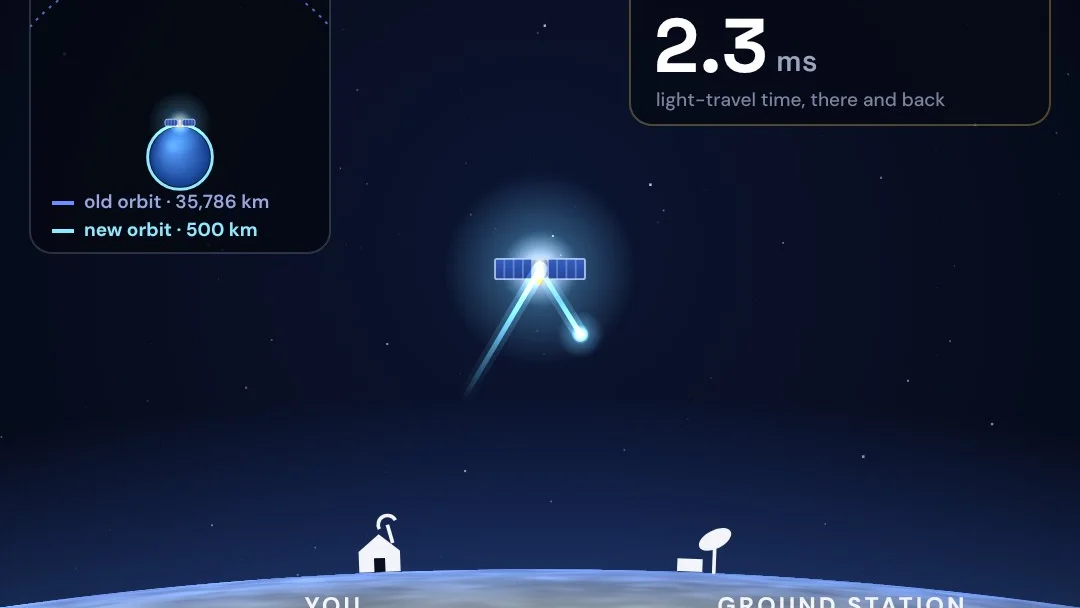
Drop a satellite from 36,000 km to about 500 km and watch the round trip shrink from half a second to a few milliseconds, and why you then need thousands.
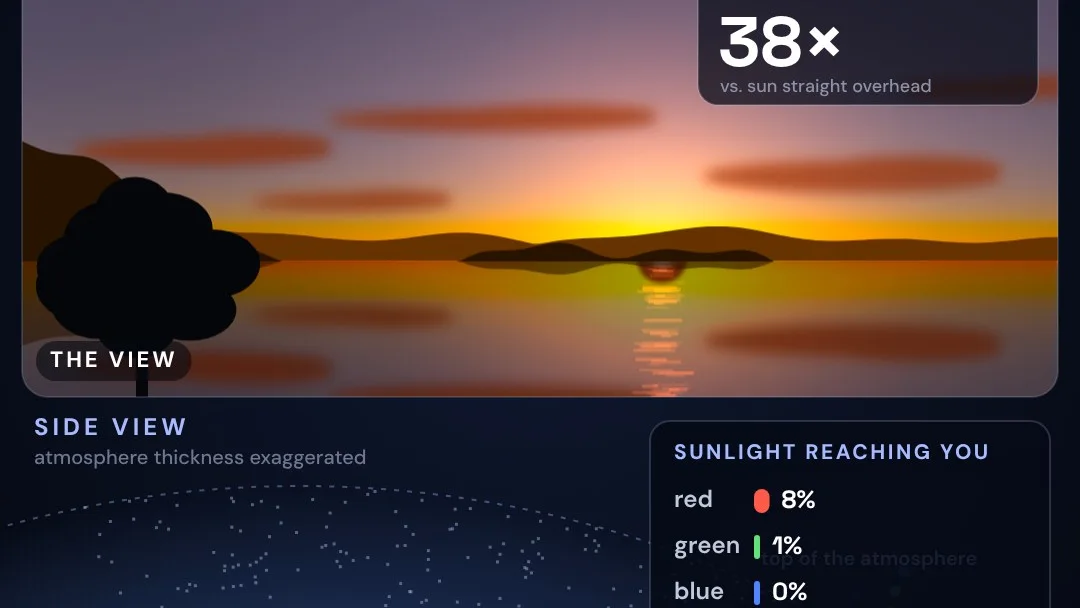
Drag the sun to the horizon. Its light crosses nearly forty times more air, and the blue scatters out before it reaches you.
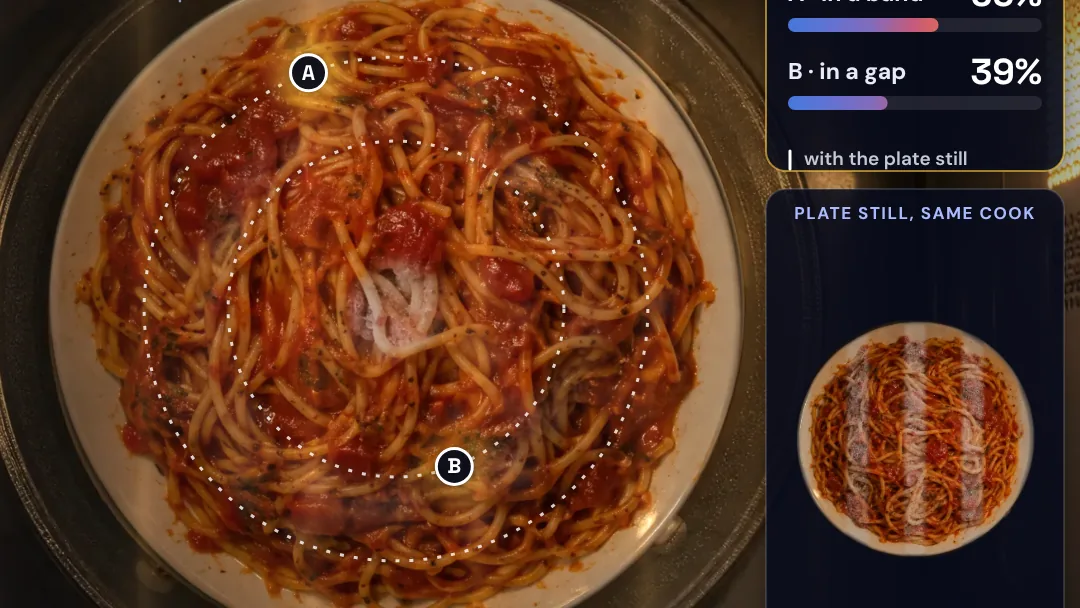
Spin the turntable and watch fixed microwave bands, about 6 cm apart, turn stripes of hot and cold food into rings.

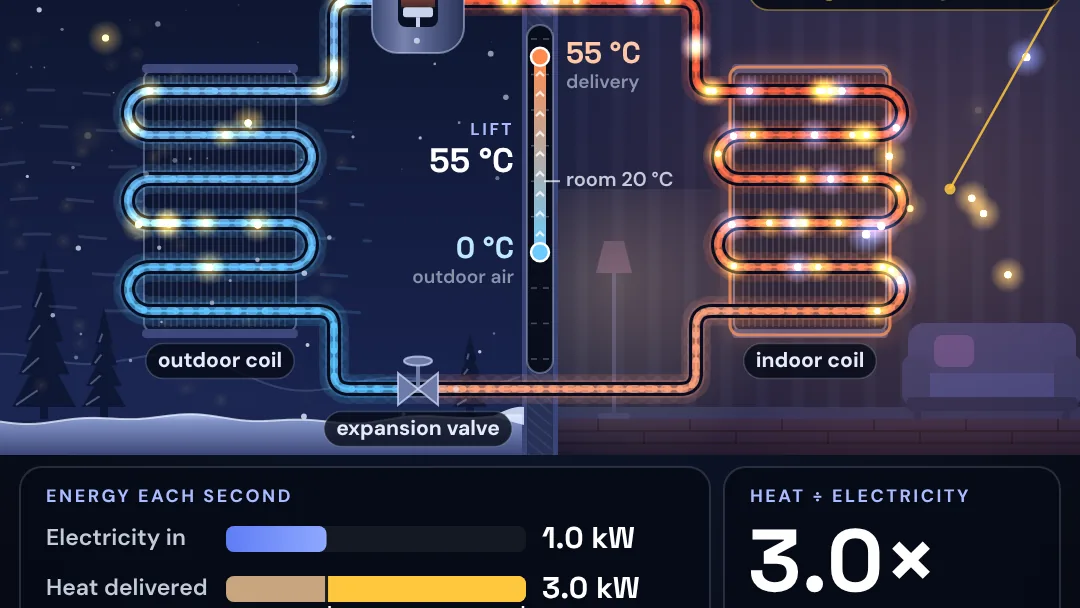
Drag the outdoor temperature down and watch a heat pump move heat in from freezing air, and why a bigger lift takes more electricity.

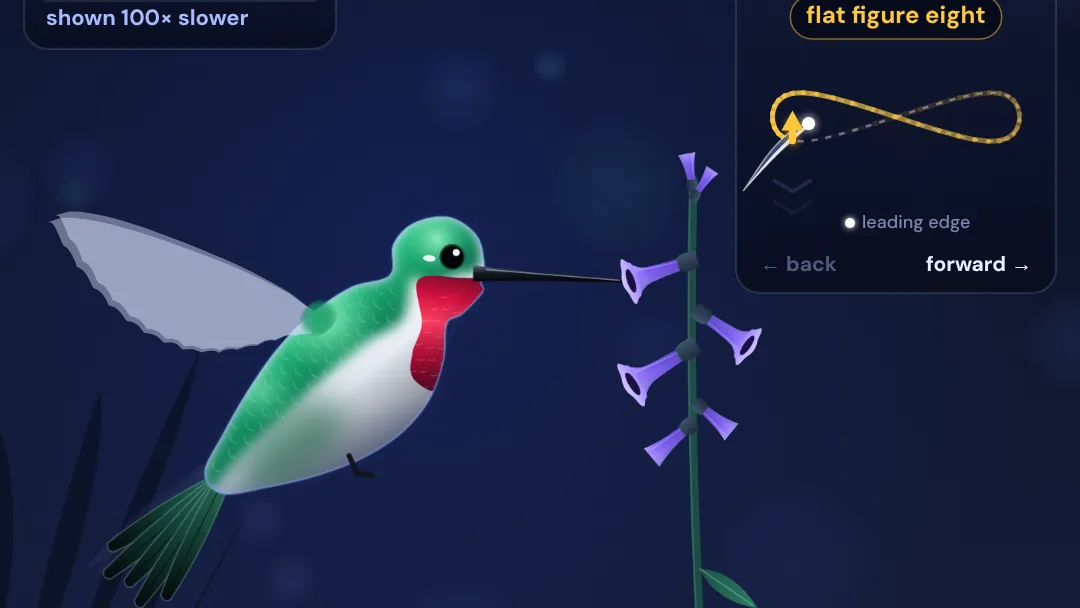
Stop a hummingbird's wing from flipping and watch its back stroke push the wrong way. Hovering flight, slowed way down.

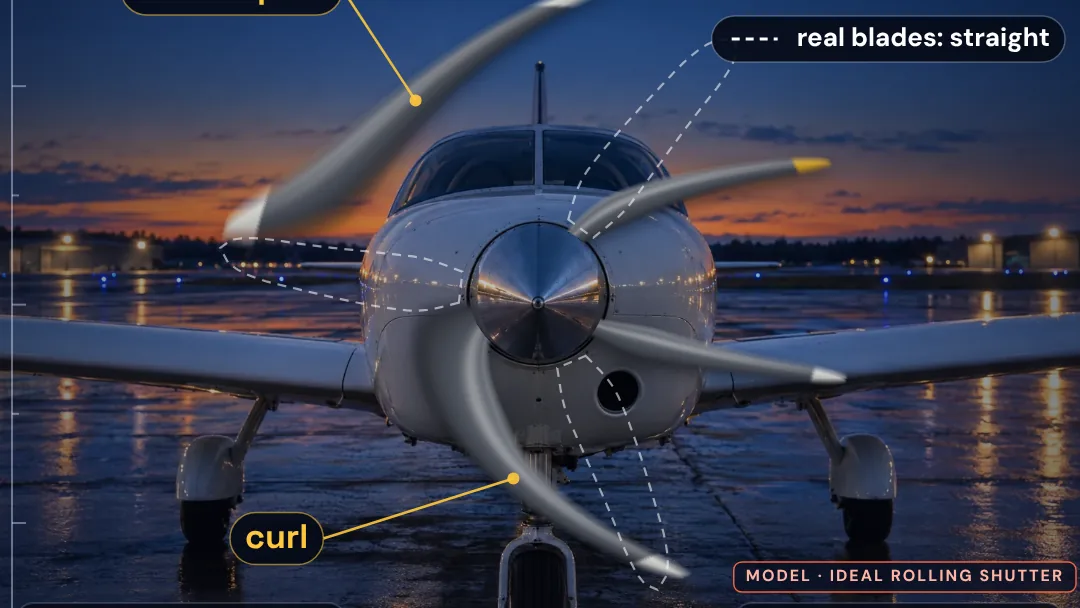
Spin a propeller and watch a phone camera read its sensor row by row, so straight blades come out curved.

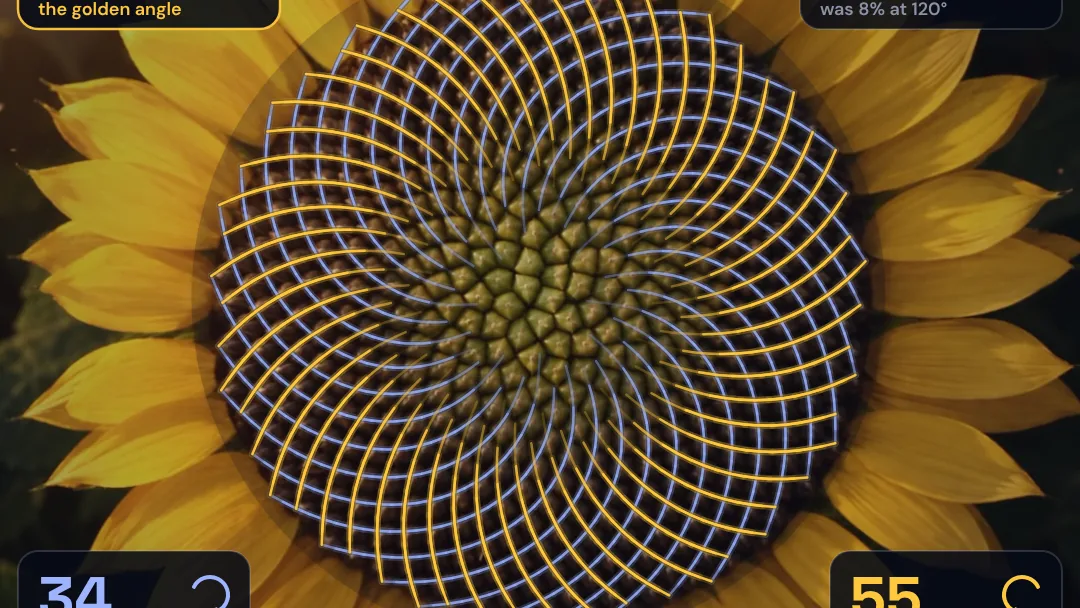
Turn each new seed by the same angle: 120° stacks seeds into three arms with gaps, while the golden angle packs them into 34 and 55 spirals.

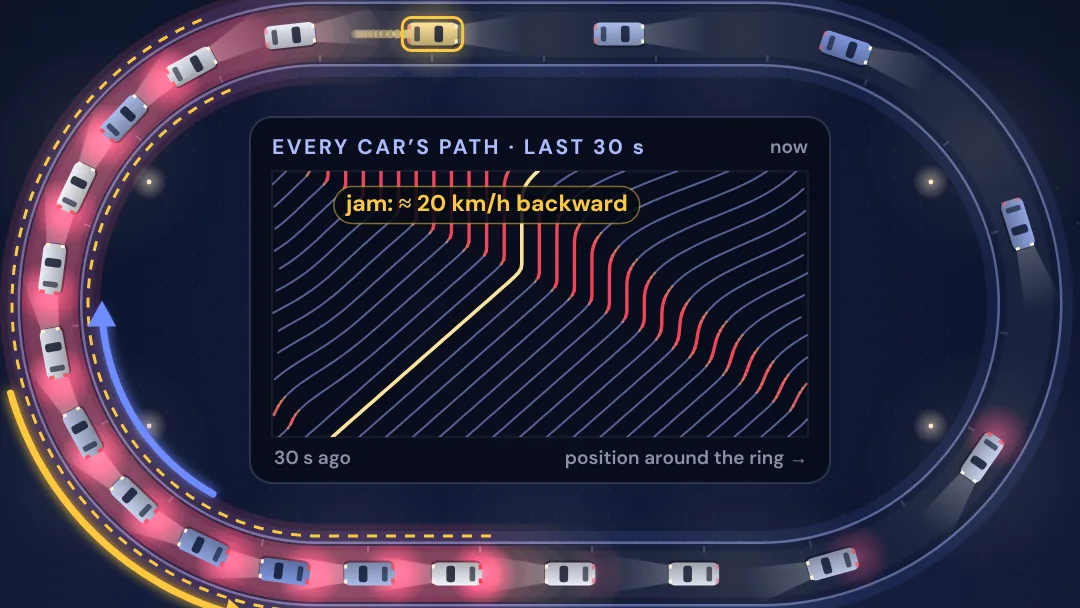
Add cars to a ring road and tap one driver's brakes: on a quiet road it fades, on a busy one it grows into a jam that drifts backward.

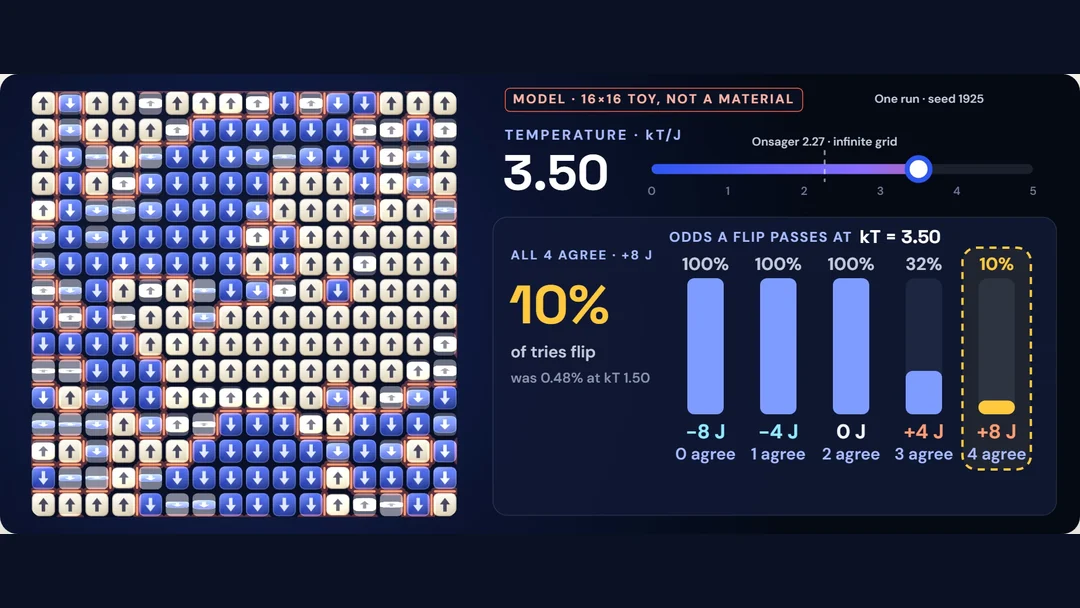
Drag the temperature and watch random thermal flips break up patches of matching spins. An interactive 16×16 Ising model, not a real material.

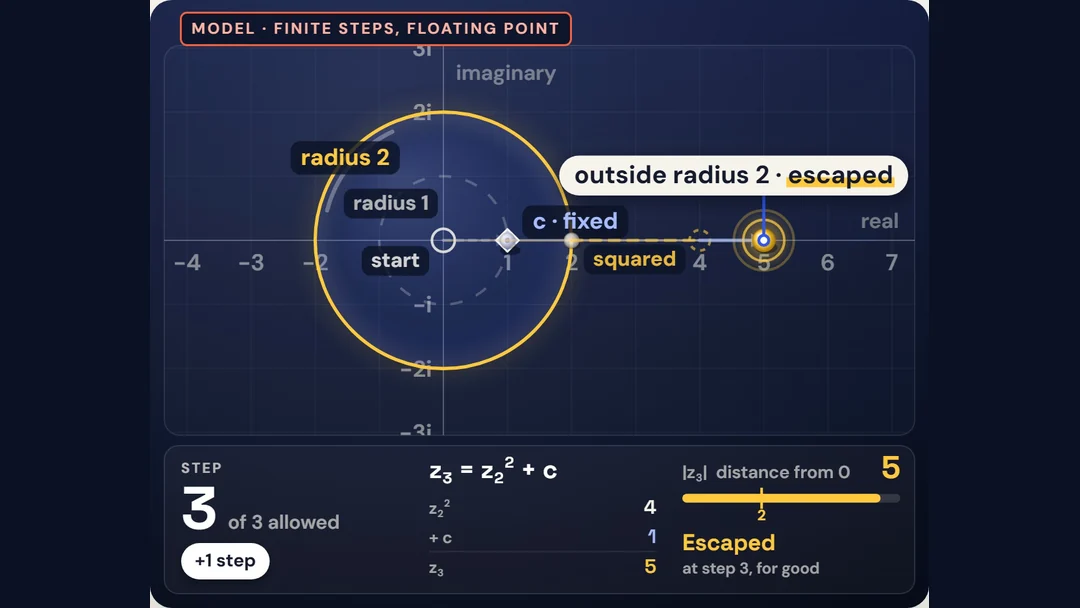
Hold c fixed, start at 0, and slide the steps: watch one point square, add c, and stay within radius 2 or escape. A finite-step model of z² + c.

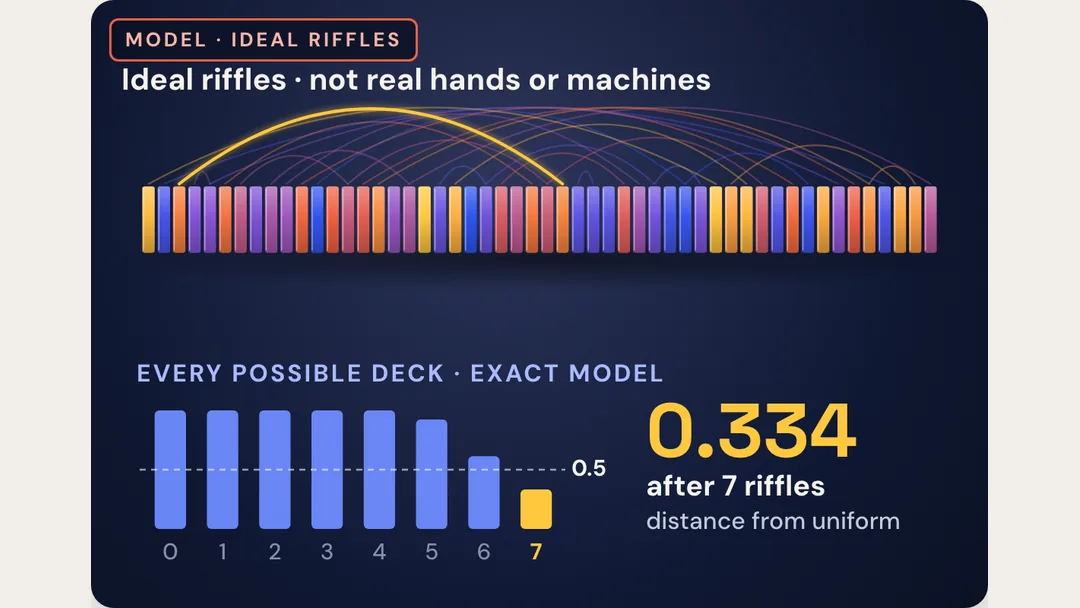
Drag the riffle count and watch a 52-card deck cut and interleave, while the exact model shows how far every possible deck is from uniform.

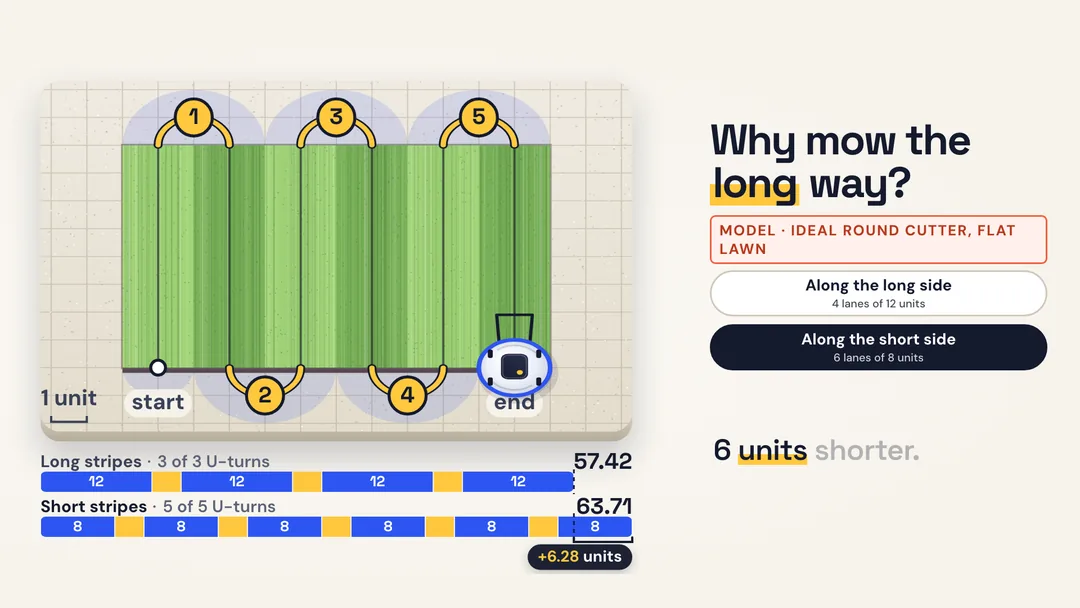
Flip the mowing stripes on a model lawn. Both ways cut the whole lawn with 48 units of lanes, but one needs 3 U-turns and the other 5.
Original publication and update records, plus explicitly labeled repository milestones.
Why do hot magnets lose their order? — publication date recorded by Explainer Tools.
Why do hot magnets lose their order? · Source Catalog publication date; linked original sourceKeep squaring and adding. Does it escape? — publication date recorded by Explainer Tools.
Keep squaring and adding. Does it escape? · Source Catalog publication date; linked original sourceHow many riffles mix a deck? — publication date recorded by Explainer Tools.
How many riffles mix a deck? · Source Catalog publication date; linked original sourceWhy mow the long way? — publication date recorded by Explainer Tools.
Why mow the long way? · Source Catalog publication date; linked original sourceHow do a few turns become one direction? — publication date recorded by Explainer Tools.
How do a few turns become one direction? · Source Catalog publication date; linked original sourceWhy does the ground stay warm? — publication date recorded by Explainer Tools.
Why does the ground stay warm? · Source Catalog publication date; linked original sourceDoes a prism create a rainbow? — publication date recorded by Explainer Tools.
Does a prism create a rainbow? · Source Catalog publication date; linked original sourceWhy does oxygen let go? — publication date recorded by Explainer Tools.
Why does oxygen let go? · Source Catalog publication date; linked original sourceHow much can compound interest really grow? — publication date recorded by Explainer Tools.
How much can compound interest really grow? · Source Catalog publication date; linked original sourceCan small cars in a tunnel move as many people as buses? — publication date recorded by Explainer Tools.
Can small cars in a tunnel move as many people as buses? · Source Catalog publication date; linked original sourceWhy are the northern lights green? — publication date recorded by Explainer Tools.
Why are the northern lights green? · Source Catalog publication date; linked original sourceWhy doesn't a compass point to the North Pole? — publication date recorded by Explainer Tools.
Why doesn't a compass point to the North Pole? · Source Catalog publication date; linked original sourceWhy is a rainbow always a circle? — publication date recorded by Explainer Tools.
Why is a rainbow always a circle? · Source Catalog publication date; linked original sourceWhy do some buildings fall in earthquakes while others stand? — publication date recorded by Explainer Tools.
Why do some buildings fall in earthquakes while others stand? · Source Catalog publication date; linked original sourceHow does a maglev train float? — publication date recorded by Explainer Tools.
How does a maglev train float? · Source Catalog publication date; linked original sourceWhy does airplane mode matter? — publication date recorded by Explainer Tools.
Why does airplane mode matter? · Source Catalog publication date; linked original sourceHow does GPS know where you are? — publication date recorded by Explainer Tools.
How does GPS know where you are? · Source Catalog publication date; linked original sourceWhy do LED lights flicker on camera? — publication date recorded by Explainer Tools.
Why do LED lights flicker on camera? · Source Catalog publication date; linked original sourceWhy does Wi-Fi slow down through walls? — publication date recorded by Explainer Tools.
Why does Wi-Fi slow down through walls? · Source Catalog publication date; linked original sourceHow does an AI chatbot pick its next word? — publication date recorded by Explainer Tools.
How does an AI chatbot pick its next word? · Source Catalog publication date; linked original sourceWhy do walking robots fall over so easily? — publication date recorded by Explainer Tools.
Why do walking robots fall over so easily? · Source Catalog publication date; linked original sourceWhy does twice the speed need four times the braking distance? — publication date recorded by Explainer Tools.
Why does twice the speed need four times the braking distance? · Source Catalog publication date; linked original sourceWhen should a falling rocket light its engine? — publication date recorded by Explainer Tools.
When should a falling rocket light its engine? · Source Catalog publication date; linked original sourceWhy do you mostly see satellites just after sunset? — publication date recorded by Explainer Tools.
Why do you mostly see satellites just after sunset? · Source Catalog publication date; linked original sourceHow high can you count on ten fingers? — publication date recorded by Explainer Tools.
How high can you count on ten fingers? · Source Catalog publication date; linked original sourceWhy is a low gear easier on a hill? — publication date recorded by Explainer Tools.
Why is a low gear easier on a hill? · Source Catalog publication date; linked original sourceWhy does the Moon change shape? — publication date recorded by Explainer Tools.
Why does the Moon change shape? · Source Catalog publication date; linked original sourceWhy do AI agents need tools? — publication date recorded by Explainer Tools.
Why do AI agents need tools? · Source Catalog publication date; linked original sourceHow can a camera tell how far away something is? — publication date recorded by Explainer Tools.
How can a camera tell how far away something is? · Source Catalog publication date; linked original sourceHow does Portrait Mode fake a blurry background? — publication date recorded by Explainer Tools.
How does Portrait Mode fake a blurry background? · Source Catalog publication date; linked original sourceHow do noise-cancelling headphones work? — publication date recorded by Explainer Tools.
How do noise-cancelling headphones work? · Source Catalog publication date; linked original sourceWhy do grandfather clocks have such long pendulums? — publication date recorded by Explainer Tools.
Why do grandfather clocks have such long pendulums? · Source Catalog publication date; linked original sourceHow does your phone camera focus? — publication date recorded by Explainer Tools.
How does your phone camera focus? · Source Catalog publication date; linked original sourceWhy do deer freeze in your headlights? — publication date recorded by Explainer Tools.
Why do deer freeze in your headlights? · Source Catalog publication date; linked original sourceWhy does microwave food heat unevenly? — publication date recorded by Explainer Tools.
Why does microwave food heat unevenly? · Source Catalog publication date; linked original sourceHow can a heat pump give more heat than it uses? — publication date recorded by Explainer Tools.
How can a heat pump give more heat than it uses? · Source Catalog publication date; linked original sourceHow does a hummingbird hover? — publication date recorded by Explainer Tools.
How does a hummingbird hover? · Source Catalog publication date; linked original sourceWhy do propellers look bent on camera? — publication date recorded by Explainer Tools.
Why do propellers look bent on camera? · Source Catalog publication date; linked original sourceWhy do sunflower seeds form spirals? — publication date recorded by Explainer Tools.
Why do sunflower seeds form spirals? · Source Catalog publication date; linked original sourceWhy do traffic jams appear out of nowhere? — publication date recorded by Explainer Tools.
Why do traffic jams appear out of nowhere? · Source Catalog publication date; linked original sourceWhy don't satellites fall down? — publication date recorded by Explainer Tools.
Why don't satellites fall down? · Source Catalog publication date; linked original sourceWhy do eyes glow red in flash photos? — publication date recorded by Explainer Tools.
Why do eyes glow red in flash photos? · Source Catalog publication date; linked original sourceWhat makes a sonic boom? — publication date recorded by Explainer Tools.
What makes a sonic boom? · Source Catalog publication date; linked original sourceWhy do hurricanes spin? — publication date recorded by Explainer Tools.
Why do hurricanes spin? · Source Catalog publication date; linked original sourceWhy do stars twinkle but planets don't? — publication date recorded by Explainer Tools.
Why do stars twinkle but planets don't? · Source Catalog publication date; linked original sourceHow far away was that lightning? — publication date recorded by Explainer Tools.
How far away was that lightning? · Source Catalog publication date; linked original sourceShould you switch doors? — publication date recorded by Explainer Tools.
Should you switch doors? · Source Catalog publication date; linked original sourceWhy is paper so hard to fold more than seven times? — publication date recorded by Explainer Tools.
Why is paper so hard to fold more than seven times? · Source Catalog publication date; linked original sourceWhy does a cold glass sweat? — publication date recorded by Explainer Tools.
Why does a cold glass sweat? · Source Catalog publication date; linked original sourceWhy does a torn QR code still scan? — publication date recorded by Explainer Tools.
Why does a torn QR code still scan? · Source Catalog publication date; linked original sourceWhy do skaters spin faster with their arms in? — publication date recorded by Explainer Tools.
Why do skaters spin faster with their arms in? · Source Catalog publication date; linked original sourceWhy does Mars seem to move backward? — publication date recorded by Explainer Tools.
Why does Mars seem to move backward? · Source Catalog publication date; linked original sourceHow do you throw a perfect spiral? — publication date recorded by Explainer Tools.
How do you throw a perfect spiral? · Source Catalog publication date; linked original sourceWhy is the background blurry? — publication date recorded by Explainer Tools.
Why is the background blurry? · Source Catalog publication date; linked original sourceWhy does Starlink feel so fast? — publication date recorded by Explainer Tools.
Why does Starlink feel so fast? · Source Catalog publication date; linked original sourceWhy is the sky blue but sunsets red? — publication date recorded by Explainer Tools.
Why is the sky blue but sunsets red? · Source Catalog publication date; linked original sourceOriginal visual lessons: change one variable, observe what happens, and understand why. Interactive models and short narrated films for curious minds.
This selection connects 56 projects across interactive. Follow the project links for the original experience; use the build log for dated context where evidence is available.
Compiled from public catalog attributions and linked original sources. Descriptions are editorial summaries, not statements made by the creator. This profile has not been claimed or endorsed.
Catalog sources gathered October 23, 2026. Primary-source access varies, particularly on social platforms. This is a selected portfolio, not a lifetime total. Images remain credited to their original creators.